




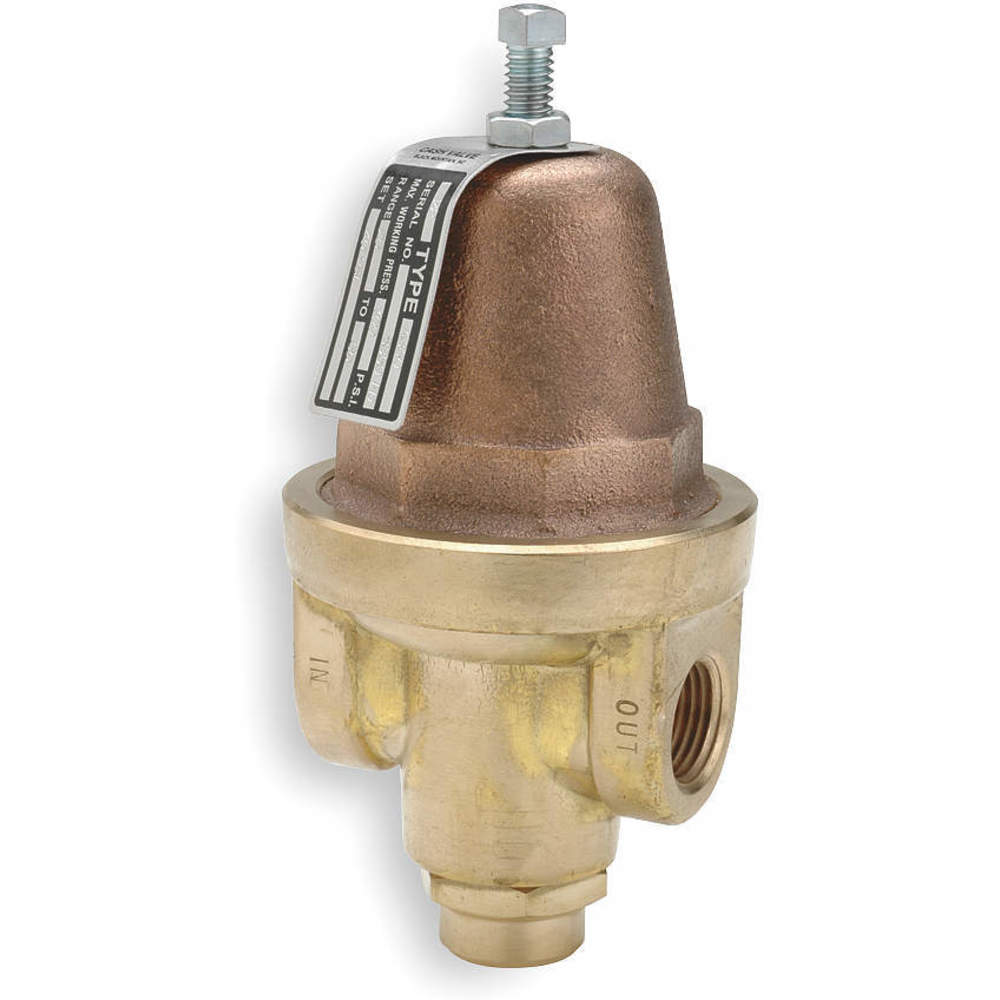
CASH VALVE 8275-0003MC Pressure Regulator 1/4 Inch 0 To 5 Psi
Ships within 2 days via
Payment
- Specifications
- Product Details
- Shipping Information
- Uses
- Working Mechanism
- Features
- Compatible Accessories
- Standards and Approvals
- Installation
- FAQ′s
- See Variants
Specifications
| Item | Pressure Regulator |
|---|---|
| Adjustable Pressure Range | 0 psi to 5 psi |
| Body Material | Brass |
| Connection Type | FNPT x FNPT |
| Factory Set Pressure | 3 psi |
| For Media | Fuel Oil, Water |
| Height | 5 5/8" |
| Inlet Connection Size | 1/4" |
| Inlet Size | 1/4" |
| Length | 2 1/2" |
| Max. Operating Pressure | 400 psi |
|---|---|
| Max. Pressure | 400 psi |
| Max. Temp. | 180°F |
| Operating Temperature Range | 180°F |
| Outlet Size | 1/4" |
| Overall Height | 5 5/8" |
| Overall Width | 2 1/2" |
| Pipe Size | 1/4" |
| Pressure Adjustment Range | 0 psi to 5 psi |
| Series | A Series |
Product Details
Cash Valve 8275-0003MC pressure regulator is ideal for maintaining consistent fluid pressure in industrial applications, ensuring efficient and safe operations. It is used in systems involving steam, liquids or gases, such as HVAC, process control and manufacturing processes. Its design enables precise pressure control & reliable functionality, contributing to operational reliability and product quality in diverse settings.
Shipping Information
| height | 15.24 |
|---|---|
| length | 10.16 |
| width | 9.14 |
| hs code | 8481809015 |
|---|---|
| country of origin | US |
| weight | 1.003500 |
Uses
Working Mechanism
- This pressure regulator functions using a diaphragm and spring arrangement.
- Variations in inlet pressure lead to flexing of the diaphragm, which in turn affects the spring tension.
- By adjusting the spring tension, the valve controls its opening and closing actions.
- This precise control enables the regulator to maintain a consistent outlet pressure.
Features
- It has a pressure adjustment range of 0 to 5 psi for optimal performance.
- This pressure regulator comes with a convenient 1/4 inch inlet and outlet size for seamless integration into your industrial setups without hassle.
- It is capable of handling temperatures up to 180 degrees F and has a maximum pressure of 400 psi.
- This 0 to 5 psi pressure regulator features brass construction for enhanced durability and corrosion resistance.
Compatible Accessories
Standards and Approvals
Installation
FAQ′s
Q. What is the difference between a pressure regulator and a relief valve?
A. A pressure regulator is a device that maintains a steady pressure in a system by controlling the fluid flow. It ensures that the pressure downstream remains within a specific range, even if the inlet pressure fluctuates. On the other hand, a relief valve is designed to release excess pressure from a system to prevent overpressure situations. When the pressure exceeds a certain threshold, the relief valve opens, allowing the fluid or gas to escape temporarily until the pressure returns to a safe level.
Q. What are the factors to be considered while choosing this pressure regulator?
A. Major factors include pressure range compatibility, fluid type, temperature range, flow rate, connection size, response time, accuracy, adjustability and installation orientation.
Q. What are the safety precautions to consider when installing this Cash Valve pressure regulator?
A.
- Ensure proper ventilation in the installation area to prevent the accumulation of hazardous gases.
- Release system pressure before installation to avoid sudden releases that could lead to injuries.
- Wear suitable personal protective equipment (PPE) like gloves and safety glasses during installation.
- Perform leak detection tests using methods like soap and water solution before and after installation.
- Securely mount the regulator to prevent vibrations or movement that might affect its performance.
- Install the regulator in the correct orientation as specified to avoid operational problems.
- Confirm material compatibility with regulated fluids or gases to prevent corrosion or reactions.
- Tighten all connections appropriately to prevent leaks or disconnections.
Related Products
| Style | Model | Inlet Size | Outlet Size | Pressure Adjustment Range | Pipe Size | Overall Height | Overall Width | Adjustable Pressure Range | Max. Temp. | Price (ex. VAT) | Cart |
|---|---|---|---|---|---|---|---|---|---|---|---|
| A | 8359-0100 | 1/2" | 1/2" | 75 psi to 125 psi | 1/2" | 6 1/8" | 2 7/8" | 75 psi to 125 psi | 180°F | 516.79 | |
| A | 8359-0003 | 1/2" | 1/2" | 0 psi to 5 psi | 1/2" | 6 1/8" | 2 7/8" | 0 psi to 5 psi | 180°F | 516.79 | |
| A | 8359-0175 | 1/2" | 1/2" | 100 psi to 250 psi | 1/2" | 6 1/8" | 2 7/8" | 100 psi to 250 psi | 180°F | 516.79 | |
| A | 08359-0014 | 1/2" | 1/2" | 2 psi to 25 psi | 1/2" | 6 1/8" | 2 7/8" | 2 psi to 25 psi | 180°F | 516.79 | |
| A | 08359-0040 | 1/2" | 1/2" | 20 psi to 60 psi | 1/2" | 6 1/8" | 2 7/8" | 20 psi to 60 psi | 180°F | 516.79 | |
| A | 8359-0060 | 1/2" | 1/2" | 40 psi to 80 psi | 1/2" | 6 1/8" | 2 7/8" | 40 psi to 80 psi | 180°F | 516.79 | |
| A | 8359-0138 | 1/2" | 1/2" | 100 psi to 250 psi | 1/2" | 6 1/8" | 2 7/8" | - | 180°F | 516.79 |
Explore Products
- EATON XTAE025C10N024 Non-Reversing Electronic Motor Starter, 25 A, 400 V 50 Hz, 1No, C Frame, 45 mm, 16-24 A
- GRAINGER ZUSA-HT-4810 Tubing, Santoprene, Tpv, Natural, 5 mm Inside Dia, 8 mm Outside Dia, 10 Ft Overall Length
- RUD CHAIN 8502204 VCOH-13 Eye Sling Hook, 13 Nominal Size, 170 mm Pitch
- THOMAS & BETTS B455AH Four Gang Nail-On New Work Outlet Box, Volume 60 Cubic Inch, Length 7-5/8 Inch
- RUBBERMAID 2172842 Trash Can, Round, Black, 33 gal Capacity, 20 29/50 Inch Width/Dia
- J.W. WINCO 12N8WP2N Leveling Mount, M12, 9.07 Inch Size Bolt Length, Steel Bolt, Zinc-Plated, Nylon
- DAYCO 95168 Truck V-belt Industry Number
- MAIN FILTER INC. MF0026043 Interchange Hydraulic Filter, Glass, 25 Micron, Viton Seal, 16.81 Inch Height
Explore More
- ABUS
- KEYSHAFT
- OHAUS
- ELK HOME
- LIGHTOLIER
- Utility/Dewatering Pumps
- Spray Gun Extensions
- Lamp Changers
- Forklift Booms
- Take-Up Units
- IRONCLAD Riggers Style Cut Resistant Gloves
- ACCURIDE 3600 Series Heavy Duty Full Extension Slides
- ANVIL AS100H Series Channels With Holes
- ANVIL AS665 Series Four Hole Double Corner Connectors
 Trade pricing is available for
  Order Value should be £500+
 ChatMRO