




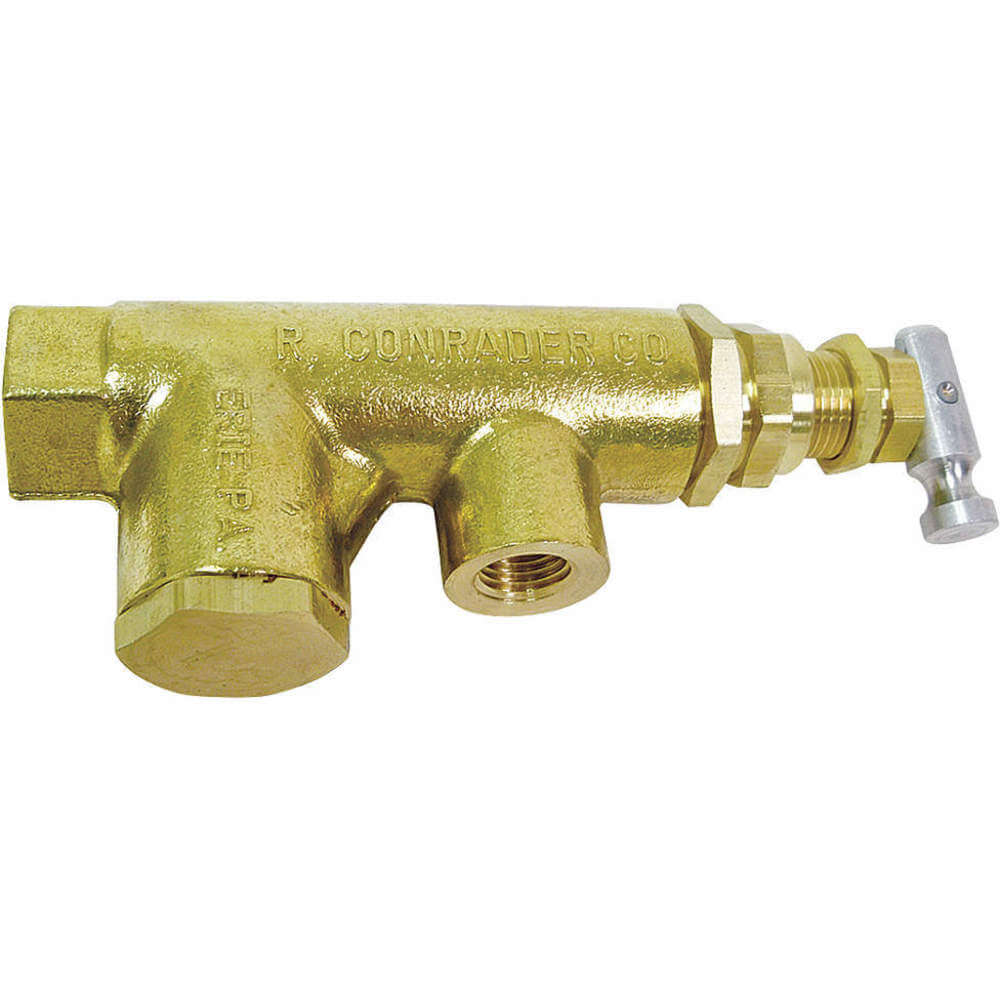
CONRADER RCL-S-HU-115-130 Pilot Valve 3/8 Inch NPT 2-1/4 Inch Length Brass
Item: AH9ACZ
Model: RCL-S-HU-115-130
11 In Stock
Ships within 2 days via
5.00% off
£163.52/unit
(Inc. VAT)
Trade Prices Available
Request Quote
Payment
- Specifications
- Product Details
- Shipping Information
- Uses
- Working Mechanism
- Features
- Compatible Accessories
- Standards and Approvals
- Installation
- FAQ′s
- See Variants
Specifications
| Item | Pilot Valve |
|---|---|
| Adjustable Pressure | Yes |
| Application | Air Compressors |
| Ball Material | Stainless Steel |
| Body Material | Brass |
| Connection Type | NPT |
| Exhaust Size | 1/4" |
| Fnpt Outlet Size | 3/8" |
| Inlet Gender | Female |
| Inlet Size | 3/8" |
| Inlet Type | NPT |
| Max. Operating Pressure | 1200 psi |
| Max. Temp. | 350°F |
| Maximum Operating Temperature | 400°F |
| Minimum Preset Pressure | 115 psi |
|---|---|
| O-ring Material | Viton |
| Outlet Gender | Female |
| Outlet Size | 3/8" |
| Outlet Type | NPT |
| Overall Height | 5.38" |
| Overall Length | 5.38" |
| Pressure Range | 20 psi to 1200 psi |
| Pressure Rating | 20 psi to 1200 psi |
| Seat Material | Brass |
| Series | RCL-S Series |
| Spring Material | Stainless Steel |
| Type | Unloader |
Product Details
Shipping Information
| Height | 3.3 |
|---|---|
| Length | 14.48 |
| Width | 5.59 |
| Country Of Origin | US |
|---|---|
| Weight | 0.540000 |
Uses
Working Mechanism
- When pressure increases in a system and reaches the unload condition, the pilot valve opens up to actuate the connected device by pressurising the line downstream.
- When the pressure in the system decreases till the load pressure is achieved, the pilot valve closes to return the device to normal operation by depressurising the line downstream.
Features
- Conrader RCL-S-HU-115-130 unloader pilot valve has a brass body with stainless steel pilot valve ball for corrosion resistance.
- The unload set pressure (cut-out) in this valve refers to the maximum pressure setting at which the valve operates the intake unloaders or discharge mechanism for venting the compressor delivery into the atmosphere.
- The load set pressure (cut-in) refers to the minimum pressure setting at which the unloader pilot valve actuates the compressor to restart producing compressed air.
- The differential refers to the pressure range between the load & unload pressures.
- It has two adjustment screws & two lock nuts of pressure & differencial types to set the load and unload pressure.
- This pilot valve has an adjustable pressure range of 115 to 130 psi.
- It comes with a removable side-mounted strainer to prevent the entry of contaminants into the connected devices.
Compatible Accessories
- Dual Control Lockouts: The manual hand unloader lever of this unloader pilot valve can be replaced with a dual control lockout for switching between start / stop and continuous operation on electric motor compressors.
Standards and Approvals
Installation
FAQ′s
Q. What is the operating temperature of this Conrader RCL-S-HU-115-130 unloader pilot valve?
A. This valve operates at temperatures ranging from -15 to 400 degrees F.
Q. What are the connections available in this Conrader RCL-S-HU-115-130 unloader pilot valve?
A. It has a 3/8 inch FNPT inlet and a 1/4 inch FNPT outlet.
Q. How to adjust this Conrader RCL-S-HU-115-130 unloader pilot valve?
A.
- Differential adjustment screw & locknut is below the pressure adjustment screw & locknut. Users should remember their location before adjustment.
- Drain the system air from the system and inspect the safety device. Loosen both the differential & pressure adjustment locknuts fully and then gently turn the differential screw in the clockwise direction till it stops.
- Remove the pressure adjustment screw from the valve body and then reinstall it by turning it two full turns.
- Restart the compressor and then increase the pressure to reach the desired load pressure. Turn off the compressor.
- Back off the differential screw by 1/3 of a counterclockwise turn to allow actuating of unloading devices as in normal operation. Tighten the differential locknut.
- After the desired load pressure is attained, turn the pressure adjustment screw slowly in the clockwise direction. As you are turning the valve, wait for the valve to load. It will exhaust air from the top of the valve body and make a hissing noise. Once air gets exhausted from the top of the valve body by making a hissing noise, tighten the pressure adjustment locknut.
Related Products
| Style | Model | Type | Pressure Range | Pressure Rating | Ball Material | Body Material | Fnpt Outlet Size | Max. Temp. | Spring Material | Price (ex. VAT) | Cart |
|---|---|---|---|---|---|---|---|---|---|---|---|
| A | RCL-S-HU-125-150 | Unloader | 20 psi to 1200 psi | 20 psi to 1200 psi | Stainless Steel | Brass | 3/8" | 350°F | Stainless Steel | 143.45 | |
| A | RCL-S-HU-145-175 | Unloader | 20 psi to 1200 psi | 20 psi to 1200 psi | Stainless Steel | Brass | 3/8" | 350°F | Stainless Steel | 143.45 | |
| A | RCL-S-HU-95-125 | Unloader | 20 psi to 1200 psi | 20 psi to 1200 psi | Stainless Steel | Brass | 3/8" | 350°F | Stainless Steel | 143.45 | |
| A | RCL-S-HU-160-175 | Unloader | 20 psi to 1200 psi | 20 psi to 1200 psi | Stainless Steel | Brass | 3/8" | 350°F | Stainless Steel | 143.45 |
Explore Products
- APPLETON ELECTRIC MLLEDR35P5BU3 Led Light Fixture, 3000 Lumens, 1.5 Inch Hub Size, Stanchion Mount
- PIP BR51C-47RB-2XL Critical Environment Reusable Labcoat, 2XL, Royal, Each
- ECONOLINE 202835 Light Box Large Grey
- EATON DH361FWK2WR Fusible Single Throw Safety Switch, 600VAC, 30 10 Hp, 20 Hp, Tpst Contact, 3P
- DYNABRADE 63981 Contact Wheel Kit 70 Duro 1 Inch
- REGAL 008969AS88 Hand Tap Set With TiALN Coating, #10-24 UNC Size, H1 Limit, 4 Flutes
- SCIENTIFIC CUTTING TOOLS LHB290750C 212835 Left Hand Boring Bar, Carbide Tin, 0.29 x 0.75 x 5/16 Shank Dia
- WOODHEAD 1300030106 6R3C04A29F060 Female Receptacle, 3 Pole, 6 Feet Length, 12/1 Size, PVC, 3/4 Inch NPT
Explore More
- BLACK & DECKER
- KEYSHAFT
- POLYSCIENCE
- EXCELTA
- AO SMITH WATER HEATER
- Floor Sign Accessories
- Vibrator Accessories
- Pilot Solenoid Valves
- Conveyor Assembly And Dryer Trays
- Confined Space Entry Accessories
- CALPIPE SECURITY BOLLARDS Bollard Cover
- APPROVED VENDOR Plain Grade 1018-1022 Carbon Steel Cup Socket Set Screws
- FEIN POWER TOOLS Scraping Blades for Oscillating Tools
- CALDWELL 20 Series Low Headroom Lifting Beams, Multiple Spread
- BALDWIN ESTATE 5103 Levers
- ANSELL 48-101 Hyflex Black Pu Coated Multi Purpose Gloves
- DESTACO 385-M Series Pull Action Latch Clamps
- GLOBE SCIENTIFIC Globe Glass Erlenmeyer Flasks, Narrow Mouth
 Trade pricing is available for
  Order Value should be £500+
 ChatMRO