


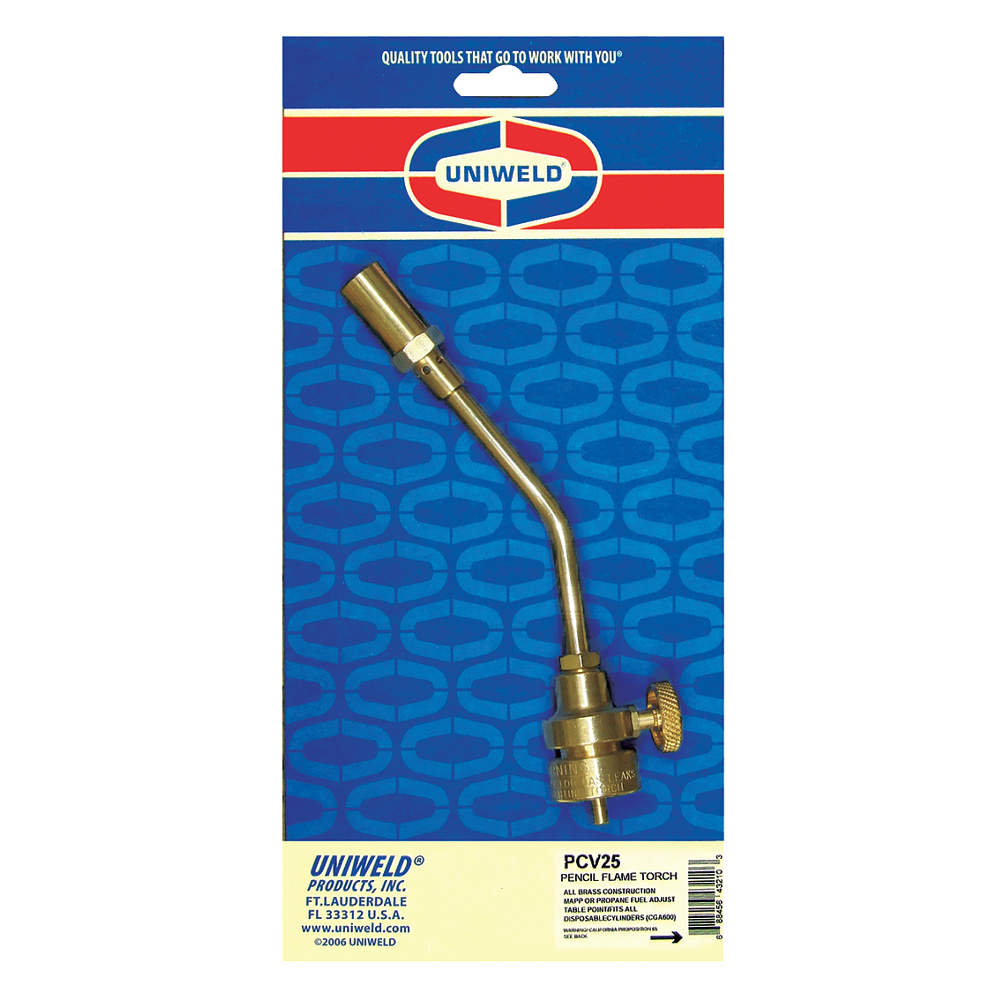
| Flame Type | Ignition Type | Soft Solder Size (minimum) | Heating Capacity (propane) | Heating Capacity (map-pro) | Flame Adjustment | Tip Adjustment | For Fuel Type | Price |
|---|---|---|---|---|---|---|---|---|
| Pencil | External Lighter | 1" | 2600 btuH | 2600 btuH | Adjustable Flame | Fixed Tip | MAP-Pro, Propane | £56.72 |
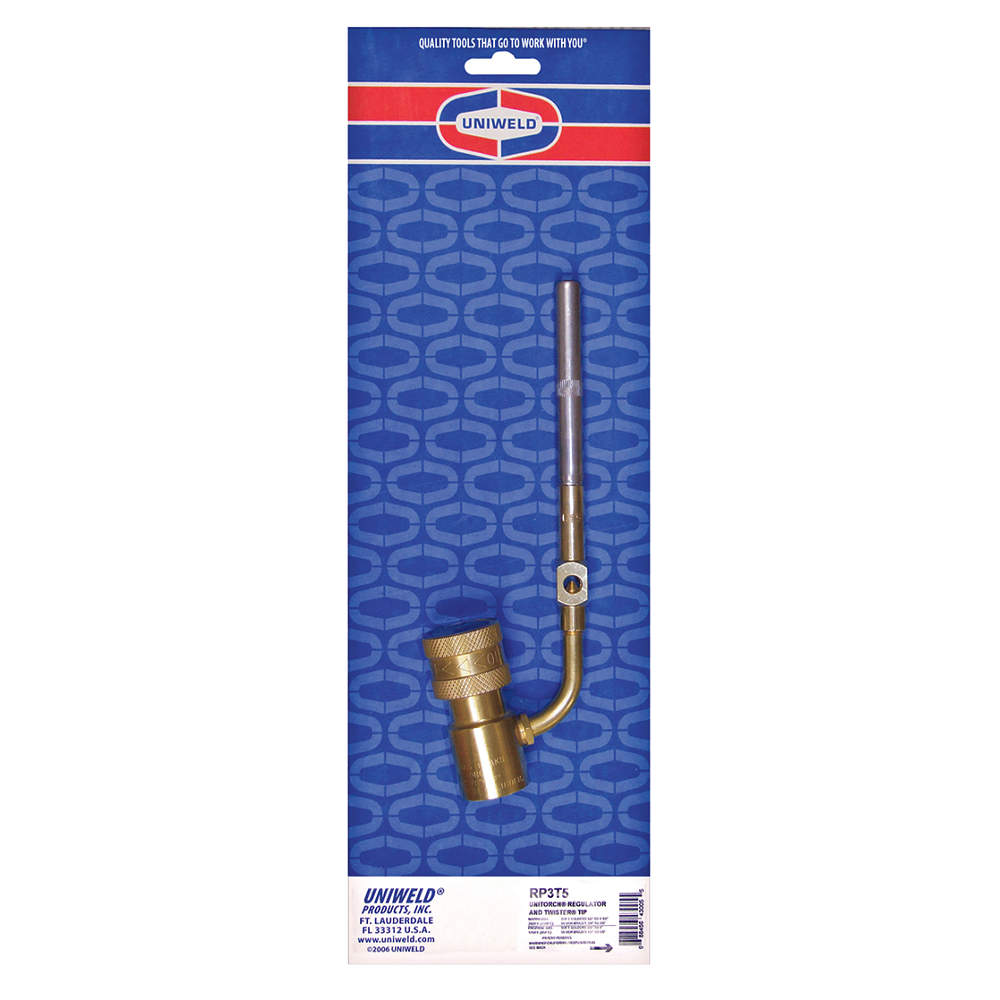
| Swirl | External Lighter | 3" | 1800 btuH | 1800 btuH | Preset Flame | 360° Swivel | MAP-Pro, Propane | £214.11 |
| Swirl | Trigger Start | 3" | 1800 btuH | 1800 btuH | Preset Flame | 360° Swivel | MAP-Pro, Propane | £272.96 |
Description
Brazing and soldering torches draw fuel & oxygen from their gas cylinders to produce flame and melt an applied filler material (solder) between two workpieces to form a joint. Brazing torches are ideal for creating stronger joints than soldering joints, but they require higher operating temperatures. Soldering torches, on the other hand, are ideal for joining heat-sensitive materials as they operate at lower temperatures than brazing torches. These torch kits include a torch, fittings and accessories for performing brazing and soldering.
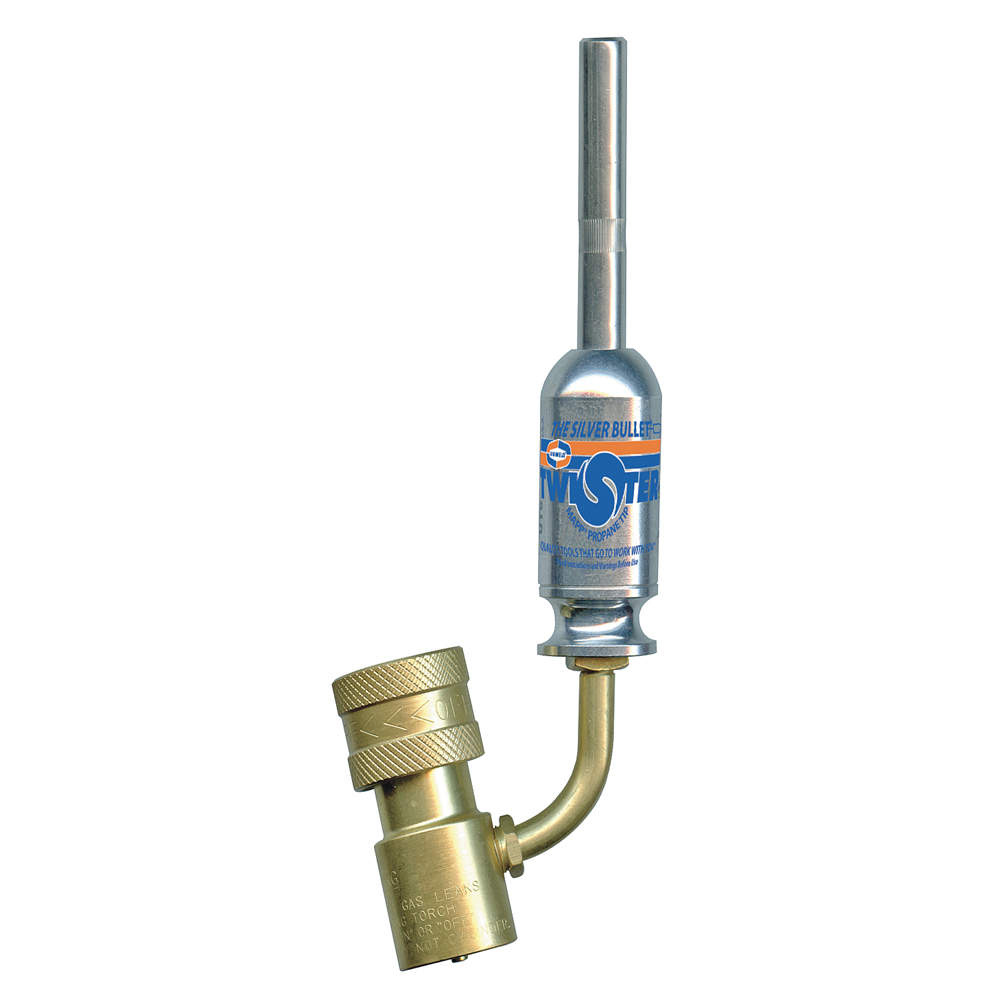
Uniweld hand torches provide exact flame positioning required in confined space plumbing, HVAC/R and automotive operations. These lightweight and portable Uniweld torches are generally used to solder copper tubing, strip paints and thaw frozen pipes by connecting to a pressurised supply of fuel gases such as propane and propylene (not included). They are equipped with an LP Twister Tip having swirl combustion technology for producing a high energy flame. These Uniweld hand torches are available in self and manual ignitor variants.
Uses & Applications
Brazing is used to make stronger joints than those made via soldering. These Uniweld torches are ideal for high temperatures or pressures, such as fire extinguisher systems or high-pressure cooling lines in air conditioning systems.
Working Mechanism
Oxy-acetylene welding torches use a high-temperature flame produced by burning a fuel gas (most commonly acetylene) mixed with pure oxygen. The base material is melted with the filler rod with the help of a flame from the combination of oxy-fuel gas through the welding torch tip.
Features
- Uniweld hand torches are designed for automotive, confined space plumbing and HVAC/R applications requiring precise flame positioning.
- These portable and lightweight Uniweld torches are operated using pressurised fuel gases such as propylene & propane and are used to solder copper tubing, strip paints and thaw frozen pipes.
- They feature an LP twister tip that uses swirl combustion technology for producing a high energy flame and come in manual & self ignitor variants.
Frequently Asked Questions
Q. What are the types of brazing processes?
A. The four main types of brazing heating methods are torch / manual brazing, resistance brazing, induction brazing and vacuum brazing.
Q. What are brazing and soldering?
A. Brazing is the process of joining two metals by heating & melting the alloy bonded between the two metal pieces. Soldering is similar to brazing, but takes place at a lower temperature. According to the American Welding Society's definition, soldering takes place with fillers (also known as solders) that get melted below 840 degrees F (450 degrees C).
Q. Where do we use brazing?
A. Brazing is used in the tool industry for joining two dissimilar metal parts and can be applied to a wide range of materials, such as copper, brass, aluminium, stainless steel and ceramics.
Q. What are the advantages of brazing?
A. The advantages of brazing include a lower processing temperature & power input than welding and producing joints with minimum residual stress & thermal distortion as compared to welding. Brazing does not require post-processing heat treatment.
Q. Why is brazing better than welding?
A. Unlike welding, brazing does not melt base metals. It also allows tighter control and produces a cleaner joint than welding. It also features less thermal distortion than welding and does not require secondary finishing.
Q. What are the advantages of soldering?
A. Soldering does not melt the base metal and can join any metal or non-metal. It requires low power and can be carried out at low temperatures.
Explore More
- CHICAGO PNEUMATIC
- KEYSHAFT
- STRUCTURAL PLASTICS
- PACKAGING CORPORATION OF AMERICA
- FLUORAMICS
- Scratch Awls
- Cable Wire and Hose Clamps
- Window Fans
- Water Level Testers
- Dye Penetrants and Inspection Kits
- AKRO-MILS 30120 Shelf Bins
- IRONCLAD Cowboy Genuine Leather Gloves
- CONDOR Mechanics Gloves, Fingerless, Breathable Back, Black
- BULLARD Front Brim Hard Hat
- APOLLO VALVES Brackets
- GREENLEE Tool Bags
- HUSQVARNA Counters
- STEINER INDUSTRIES 2119Y Welding Gloves

 ChatMRO