


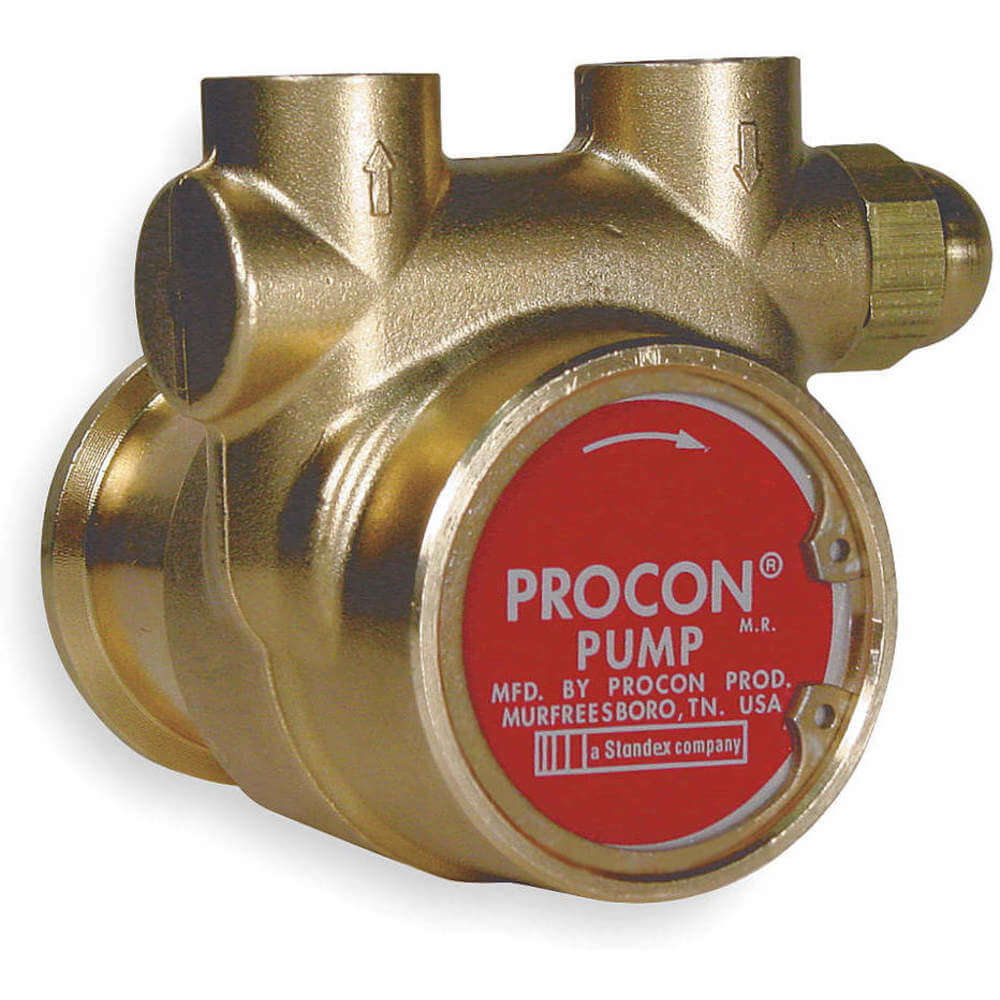
| Mounting Type | Max. Flow Rate | Seal Material | Flow Rate @ 150 Psi | Flow Rate @ 200 Psi | Flow Rate @ 50 Psi | Flow Rate @ 100 Psi | Flow Rate @ 250 Psi | Price |
|---|---|---|---|---|---|---|---|---|
| Carbonator Clamp Style | 35 GPH | Carbon Ceramic | 33 GPH | 31 GPH | 37 GPH | 35 GPH | 29 GPH | £126.78 |
| Carbonator Clamp | 60 GPH | Carbon, Ceramic | 58 GPH | 56 GPH | 62 GPH | 60 GPH | 54 GPH | £126.78 |
| Carbonator Clamp | 100 GPH | Carbon, Ceramic | 98 GPH | 96 GPH | 102 GPH | 100 GPH | 94 GPH | £126.78 |
| Carbonator Clamp | 140 GPH | Carbon, Ceramic | 139 GPH | 137 GPH | 143 GPH | 141 GPH | 135 GPH | £126.78 |
| Carbonator Clamp | 25 GPH | Carbon, Ceramic | 23 GPH | 21 GPH | 27 GPH | 25 GPH | 19 GPH | £126.78 |
| Bolt On | 100 GPH | Carbon Ceramic | 98 GPH | 96 GPH | 102 GPH | 100 GPH | 94 GPH | £231.2 |
| Clamp On | 100 GPH | Carbon Ceramic | 98 GPH | 96 GPH | 102 GPH | 100 GPH | 94 GPH | £142.79 |
Working Mechanism
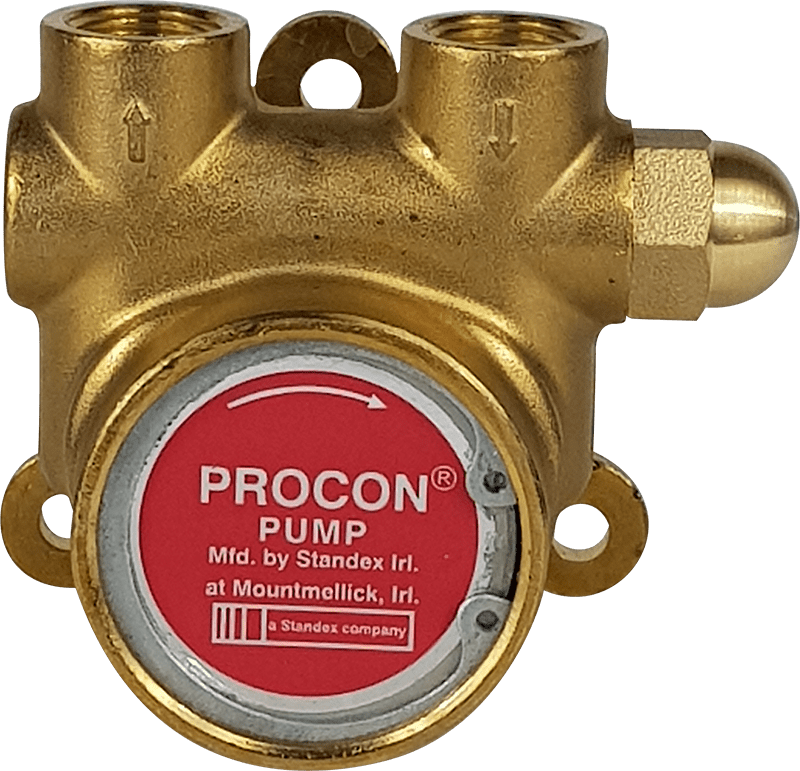
- The casing contains a central rotor with vanes that move eccentrically.
- Rotating the rotor results in the outward movement of the vanes, forming a seal.
- Fluid or gas is drawn into a sealed chamber by the rotating vanes.
- The sealed chamber's volume decreases, causing compression of the trapped fluid / gas.
- The outlet port allows the compressed fluid / gas to be expelled.
- The process of suction, compression, and discharge is continuously sustained by the rotor's rotation.
Features
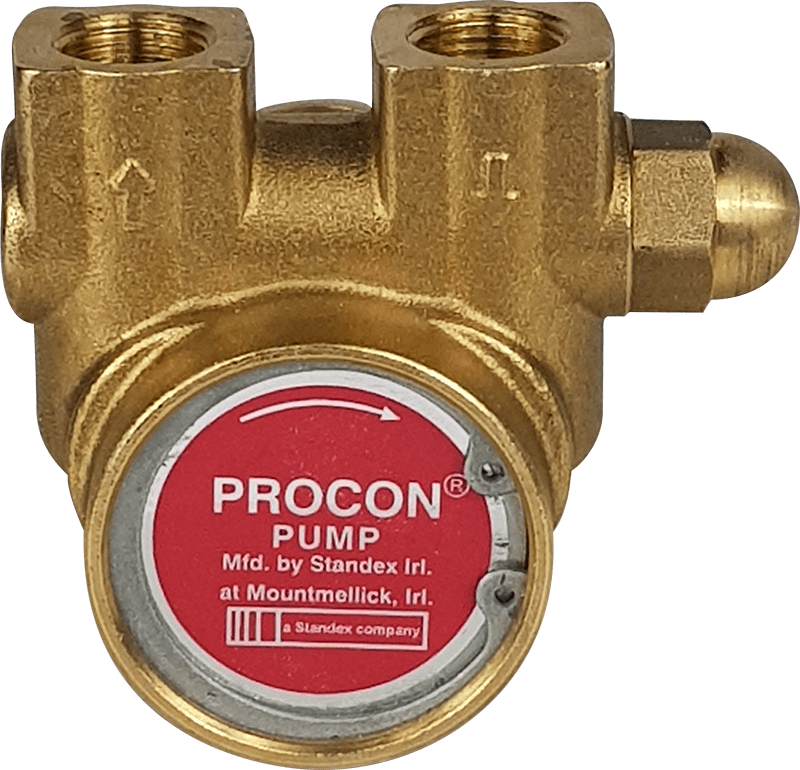
- They feature brass construction for durability and corrosion resistance.
- These pumps come without an integral strainer & a relief valve to protect against excessive pressure.
- They offer clamp-on / bolt-on mounting options for flexible installation and self-priming & maintenance-free operation, with low vibration and pulsation characteristics.
- These pumps have self-priming ability up to 2 meters, ensuring easy startup.
- They have fluid flow rates ranging from 45 to 425 LPH.
Frequently Asked Questions
Q. What is the range of viscosities and operating temperatures of the compatible fluids of these pumps?
A. The compatible fluids have viscosities up to 100cP and operating temperatures ranging from -20 to 90 degrees C.
Q. How to install these pumps?
A.
- Position the pump in the desired location.
- Securely attach the pump using clamp-on or bolt-on mounting options.
- Connect the pump's inlet and outlet ports to the respective fluid lines.
- Ensure proper alignment and tight connections to prevent leaks.
- Prime the pump if required, following the manufacturer's instructions.
- Connect the pump to the power source and test its functionality.
- Make any necessary adjustments for optimal performance.
- Regularly monitor and maintain the pump to ensure efficient operation.
Q. What safety precautions should I take while using Procon Series 2 rotary vane pumps?
A.
- Follow the manufacturer's instructions and guidelines for installation and operation.
- Ensure the pump is properly grounded to prevent electrical hazards.
- Regularly inspect the pump for signs of wear, damage, or leaks.
- Avoid operating the pump beyond its specified pressure and temperature limits.
- Use appropriate personal protective equipment (PPE) when handling fluids or performing maintenance.
- Keep the pump area clean and free from potential tripping hazards.
- If applicable, disconnect power before performing any maintenance or repairs.
Explore More
- KEYSHAFT
- STARRETT
- TOUGHSTRIPE
- MARKEL PRODUCTS
- LIXER TOOLS
- Electric Water Heaters with Tank
- Carpet Extractors
- Piano Hinges
- Fuel Systems Tools
- Diggers Paving Breakers and Jackhammers
- AKRO-MILS 30130 Shelf Bins
- ANSELL 11-724 Hyflex Lightweight Abrasion Resistant Gloves
- SALISBURY Class 00 Electrical Insulating Rubber Gloves, 14 Inch, Red
- CONDOR Coated Gloves, Foam, Nitrile, Palm Dipped
- VIEGA PROPRESS Coupling no stop, Press x Press
- RUBBERMAID Enclosed Service Cart
- DAYTON Self-Dumping Hopper
- ALLEGRO SAFETY Fit Testing Kits
- KERN AND SOHN ORA-B Series Analog Refractometers
- STARRETT IP67 Electronic Calipers, Wireless Output

 ChatMRO