


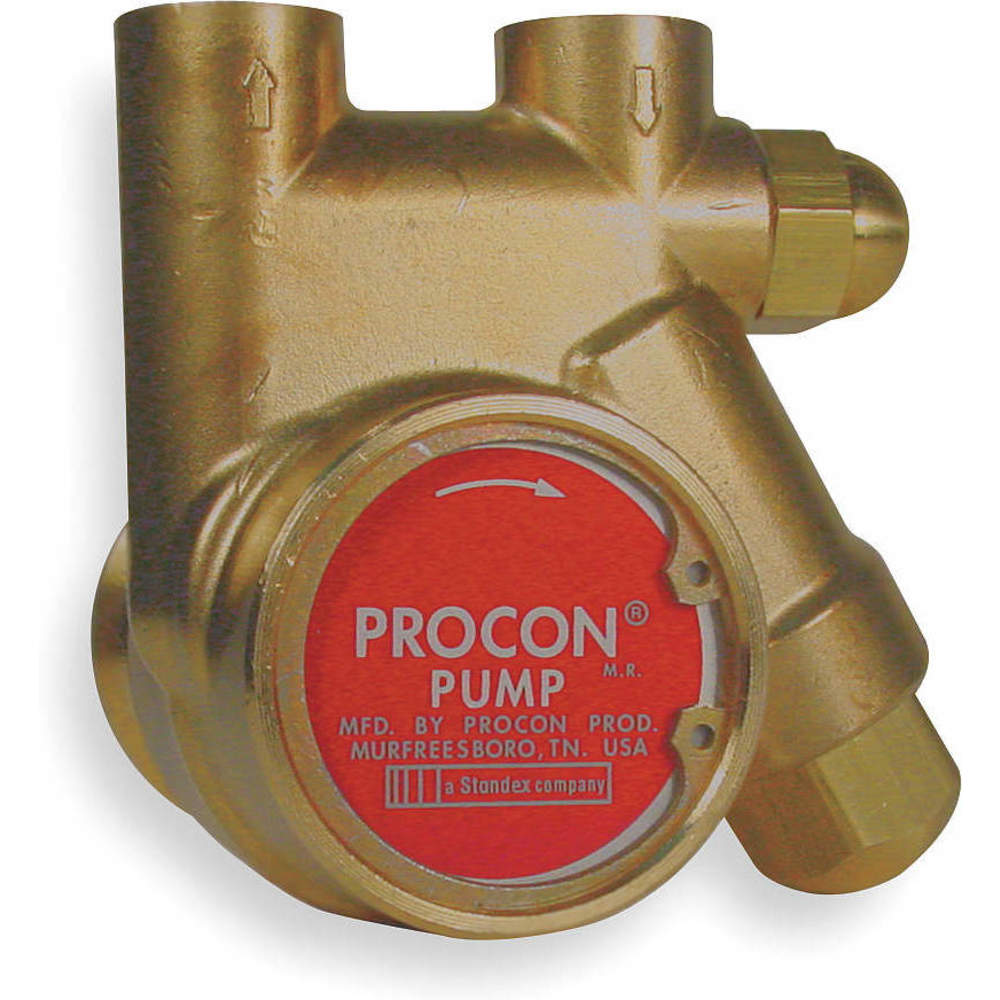
| Mounting Type | Max. Flow Rate | Max. Operating Pressure | Seal Material | Shaft Material | Flow Rate @ 150 Psi | Flow Rate @ 200 Psi | Flow Rate @ 50 Psi | Price |
|---|---|---|---|---|---|---|---|---|
| Carbonator Clamp | 125 GPH | 150 psi | Carbon, Ceramic | Stainless Steel | 124 GPH | 122 GPH | 128 GPH | £159.69 |
| Carbonator Clamp | 35 GPH | 150 psi | Carbon, Ceramic | Stainless Steel | 33 GPH | 31 GPH | 37 GPH | £150.81 |
| Clamp On | 100 GPH | 150 psi | Carbon Ceramic | Stainless Steel | 98 GPH | 96 GPH | 102 GPH | £150.81 |
| Carbonator Clamp | 140 GPH | 150 psi | Carbon, Ceramic | Stainless Steel | 139 GPH | 137 GPH | 143 GPH | £150.81 |
| Carbonator Clamp | 140 GPH | 150 psi | Carbon, Ceramic | Brass | 139 GPH | 137 GPH | 143 GPH | £159.69 |
| Clamp On | 100 GPH | 60 psi | EPDM, Nitrile | Stainless Steel | 98 GPH | 96 GPH | 102 GPH | RFQ |
| Clamp On | 100 GPH | 60 psi | Carbon Ceramic | Stainless Steel | 98 GPH | 96 GPH | 102 GPH | RFQ |
Working Mechanism
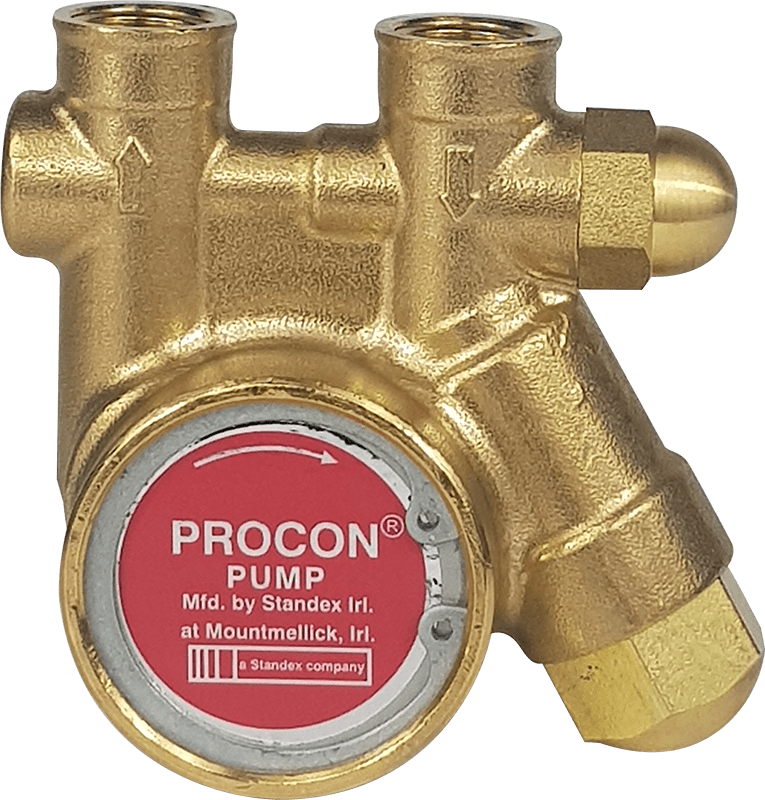
- The casing accommodates a central rotor with vanes that move eccentrically.
- The rotation of the rotor leads to the outward movement of the vanes, creating a seal.
- Through the rotation of the vanes, fluid or gas is drawn into a sealed chamber.
- As a result, the volume of the sealed chamber reduces, compressing the trapped fluid / gas.
- The outlet port enables the expulsion of the compressed fluid / gas.
- The continuous rotation of the rotor sustains the process of suction, compression, and discharge.
Features
- They feature self-priming (water) and maintenance-free operation with low vibration and pulsation characteristics.
- These pumps come with an internal relief valve in a standard-non external adjust configuration.
- They have brass housing for durability and corrosion resistance.
- These pumps are equipped with an integral strainer for debris removal from the pumping fluid.
- They have 3/8 inch NPT inlet and outlet connections for easy installation.
- These pumps come with EPDM / nitrile elastomers for superior resistance to oils, fuels, acids and polar solvents
- They offer a flow rate of 100 GPH for efficient fluid transfer.
Frequently Asked Questions
Q. What is the operating fluid temperature range of these pumps?
A. -4 to 160 degrees F.
Q. What is the maximum mechanical horsepower required for energy efficiency in these pumps?
A. Procon 1 Series rotary vane pumps have a maximum mechanical horsepower of 0.42 hp for energy efficiency.
Q. How do I clean and maintain these pumps?
A.
- Disconnect power and remove the pump.
- Clean the exterior and disassemble the pump.
- Submerge components in a suitable cleaning solution.
- Inspect vanes and integral strainer for wear or damage.
- Apply recommended lubricant to moving parts.
- Check and replace seals / O-rings if needed.
- Reassemble the pump following the guidelines.
- Reinstall the pump and test its functionality.
- Establish a regular maintenance schedule.
Explore More
- CDI TORQUE PRODUCTS
- DYNASONICS
- KEYSHAFT
- GC VALVES
- TRI STAR
- Magnetically Actuated Safety Interlock Switches
- Welder Generators
- Spotting Drill Bits
- Sight Gauges
- PTFE Hose With Wire Braid
- PS DOORS Edgehalt Single Ladder Safety Gates
- ADB HOIST RINGS MFG. Shackle Hoist Rings
- ACCURIDE C204A LR Series Medium Duty 3/4 Extension Slides
- MAYHEW TOOLS Brass Sets
- DIXON Clamp Adapters
- VERMONT GAGE Go Standard Thread Plug Gages, 1/2-13 Unc Lh
- MARTIN SPROCKET 3V Series Hi-Cap Wedge Stock 5 Groove MST Sheaves
- MUELLER INDUSTRIES 74IHH Sure Check Double Disc Check Valves
- T&S ChekPoint Electronic Faucets

 ChatMRO