


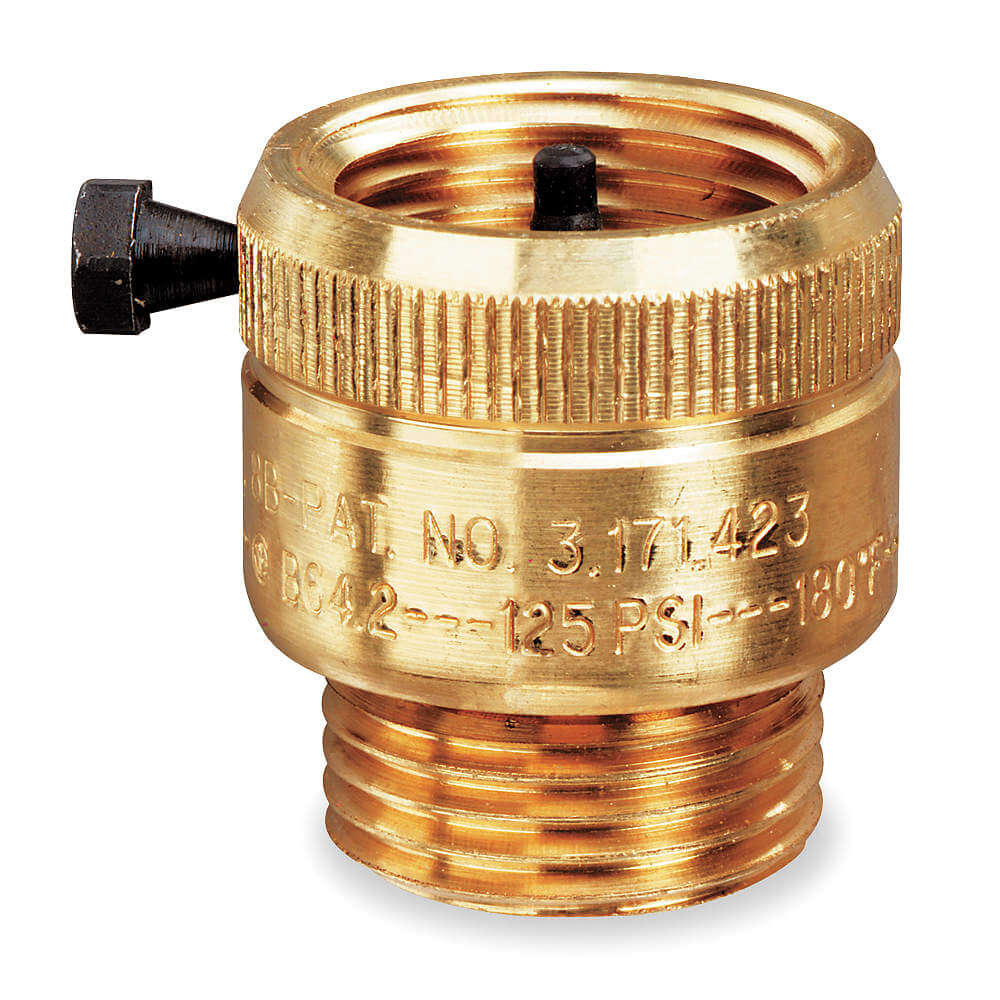
| Connection Type | Material | Max. Temp. | Max. Working Pressure | Valve Type | Max. Pressure | Height | Temp. Range | Price |
|---|---|---|---|---|---|---|---|---|
| Female GHT x Male GHT | Brass | - | - | - | 125 psi | 1 1/2" | 180°F | £29 |
| GHT | Brass | - | - | - | 125 psi | 1 1/2" | 180°F | £59.57 |
| Female GHT x Male GHT | Brass | 180°F | 8.6 Bar | No Shutoff Valve | 125 psi | 1 1/2" | 180°F | £20.08 |
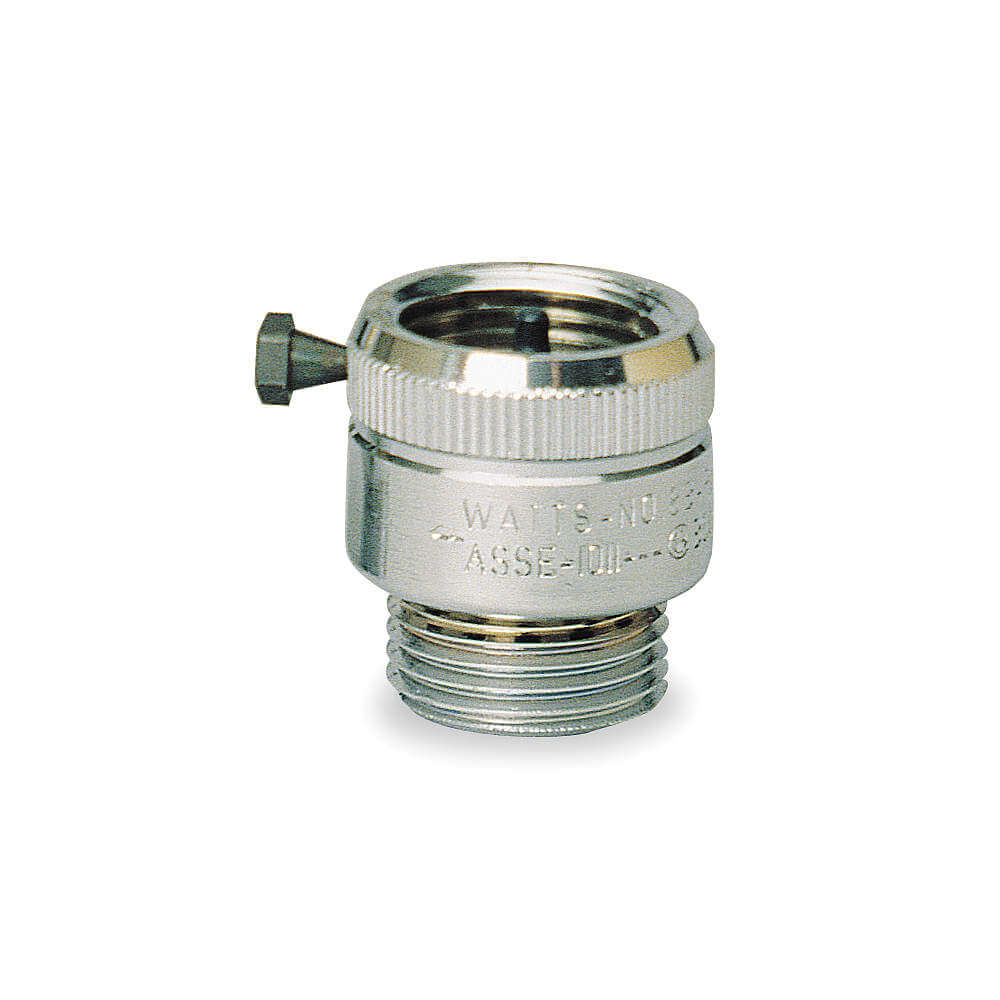
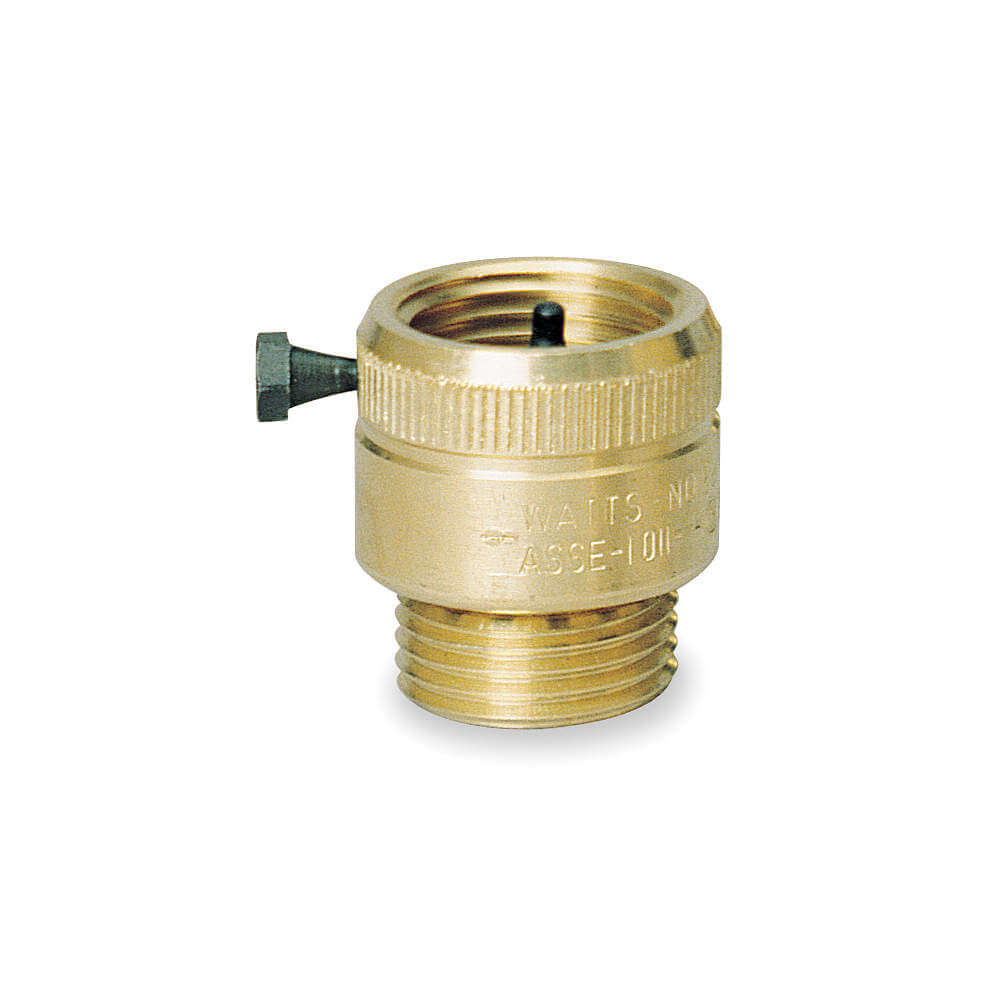
Working Mechanism
- Thread a Watts vacuum breaker onto the hose bibb & hose. Then tighten the attached set screw till its head breaks off.
- These vacuum breakers allow passage of water in normal conditions and prevent the entry of air. However, when the water pressure at the unit's location decreases below a certain level, the volume breaker starts intaking air to break the suction effect caused by vacuum ( low pressure), thereby preventing backflow or back siphoning.
- They can be drained off in winters after use by removing the hose and lightly pulling down the knurled tip on the stem.
Features
- Watts vacuum breakers feature brass construction with stainless steel working parts and have rubber diaphragm & disc for corrosion resistance and durability.
- They can be screwed directly onto a sill cock and require no plumbing changes.
- These Watts 8 Series vacuum breakers can operate at a maximum pressure of 125 psi and a maximum temperature of 180 degrees F.
- They have GHT type connections on both male & female ends with 3/4 inch inlet & outlet size.
- These vacuum breakers have a break-away set screw for tamper resistance.
- Selected models of these Watts vacuum breakers are made of chrome plated brass for protection against scratches and easy cleaning.
Frequently Asked Questions
Q. How can users perform maintenance operations on these Watts vacuum breakers?
A.
Q. Does a vacuum breaker prevent freezing?
A. Yes, a properly drained out vacuum breaker can prevent freezing of the fixtures in winters to protect them from cracks.
Q. What is the difference between a backflow preventer and a vacuum breaker?
A. Backflow preventers prevent the reverse flow of fluids irrespective of the type of fluids and their location. A vacuum breaker is a specialised backflow preventer that stops non potable water from back siphoning into the potable water supply.
Q. What is Back siphonage?
A. Back siphonage or backflow in a system occurs when a negative pressure (vacuum or partial vacuum) zone is created in the supply piping. It results in siphoning effect from the contaminated water sources into the drinkable water supply lines.
Explore More
- BAILEIGH INDUSTRIAL
- KEYSHAFT
- NDS DRAINAGE
- HARLOFF
- VIDMAR
- Folding and Stacking Chair Carts
- Toilet Brushes and Holders
- Sign Holders
- Sensing Probes
- Flange Bolts
- RUD CHAIN Washers
- JOHN GUEST Bulkhead Unions, Acetal Gray
- ACME ELECTRIC Three Phase Dry Type Distribution Transformers, 240V Delta Primary Volts, 208Y/120 Secondary Volts
- ANVIL 005G Series J Style Hangers, Electro-Galvanized Steel
- ANVIL AS200DS Series Dakota Smart-Strut
- STREAMLIGHT Weapon Mounted Flashlights
- FOREVERBOLT NL-19 Grade 18-8 Stainless Steel Flange Hex Serrated Locknuts
- REMCO 3 Inch Metal Detectable Scrapers
- BALDOR / DODGE XT30 Heavy Duty Drum Pulleys
- AMETEK LAMB Brushed Motors, 7.2 Frame Size, 120V, Tangential, 2 Stage

 ChatMRO