


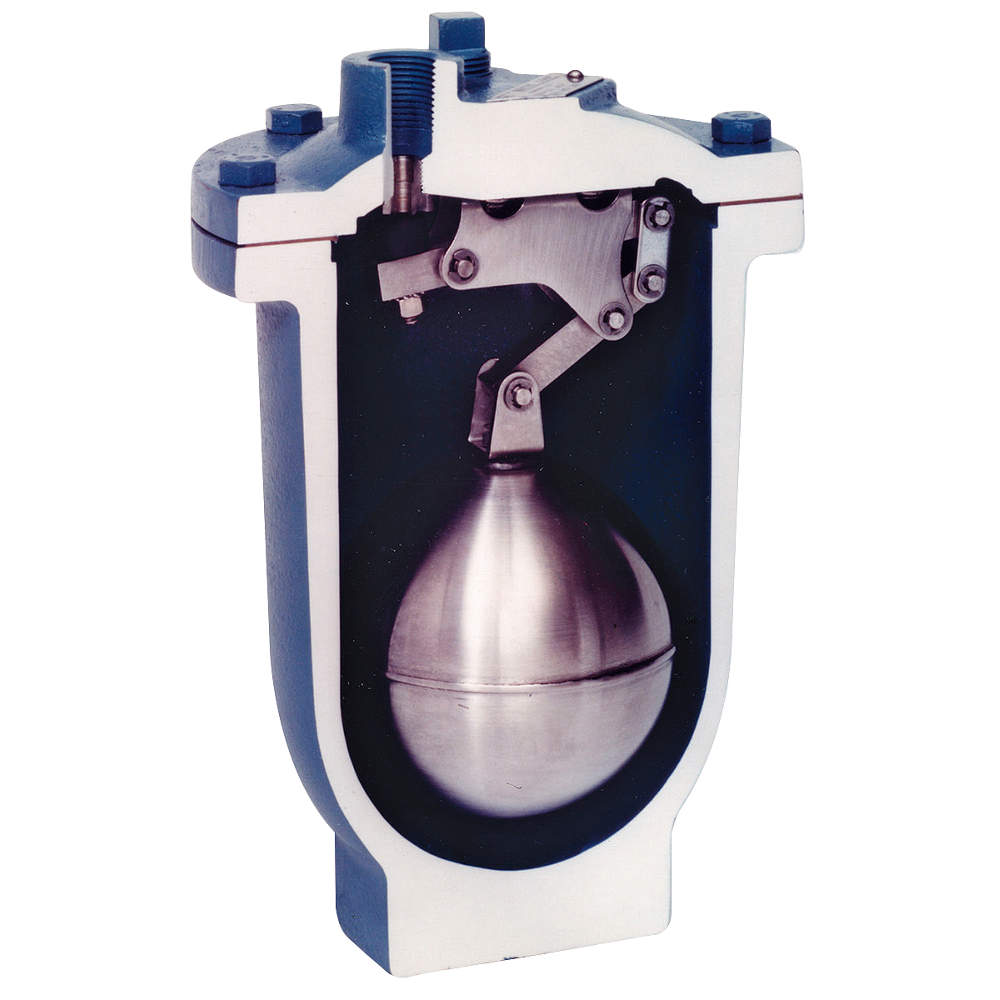
| Max. Pressure | Inlet Size | Outlet Size | Connection Type | Body Material | Vacuum Pressure | Min. Pressure | Grade | Price |
|---|---|---|---|---|---|---|---|---|
| 150 psi | 1" | 1/2" | FNPT | Cast Iron | 29 in. hg | 5 psi | Grade 316 | £712.31 |
| 150 psi | 2" | 1/2" | FNPT | Cast Iron | 29 in. hg | 5 psi | Grade 316 | £806.75 |
| 150 psi | 2" | 1/2" | FNPT | Cast Iron | 29 in. hg | 5 psi | Grade 316 | £1455.16 |
| 150 psi | 3" | 1/2" | FNPT | Cast Iron | 29 in. hg | 5 psi | Grade 316 | £1609.53 |
| 150 psi | 4" | 1/2" | FNPT | Cast Iron | 29 in. hg | 5 psi | Grade 316 | £1954.75 |
| 175 psi | 1/2" | 1/2" | FNPT | Cast Iron | 29 in. hg | 5 psi | Grade 316 | £243.23 |
| 175 psi | - | 1/2" | FNPT | - | - | - | Grade 316 | £256.55 |
| 175 psi | 1" | 1/2" | FNPT | Cast Iron | 29 in. hg | 5 psi | Grade 316 | £270.5 |
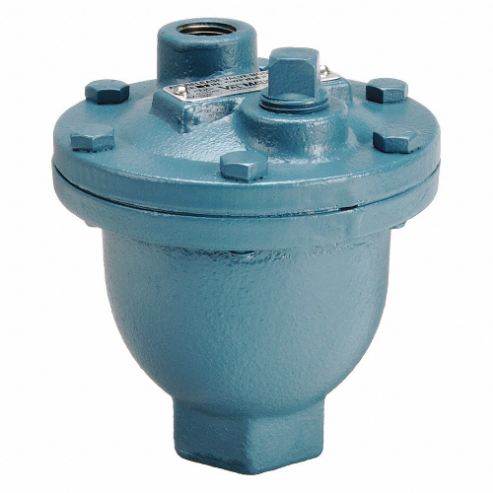
Description
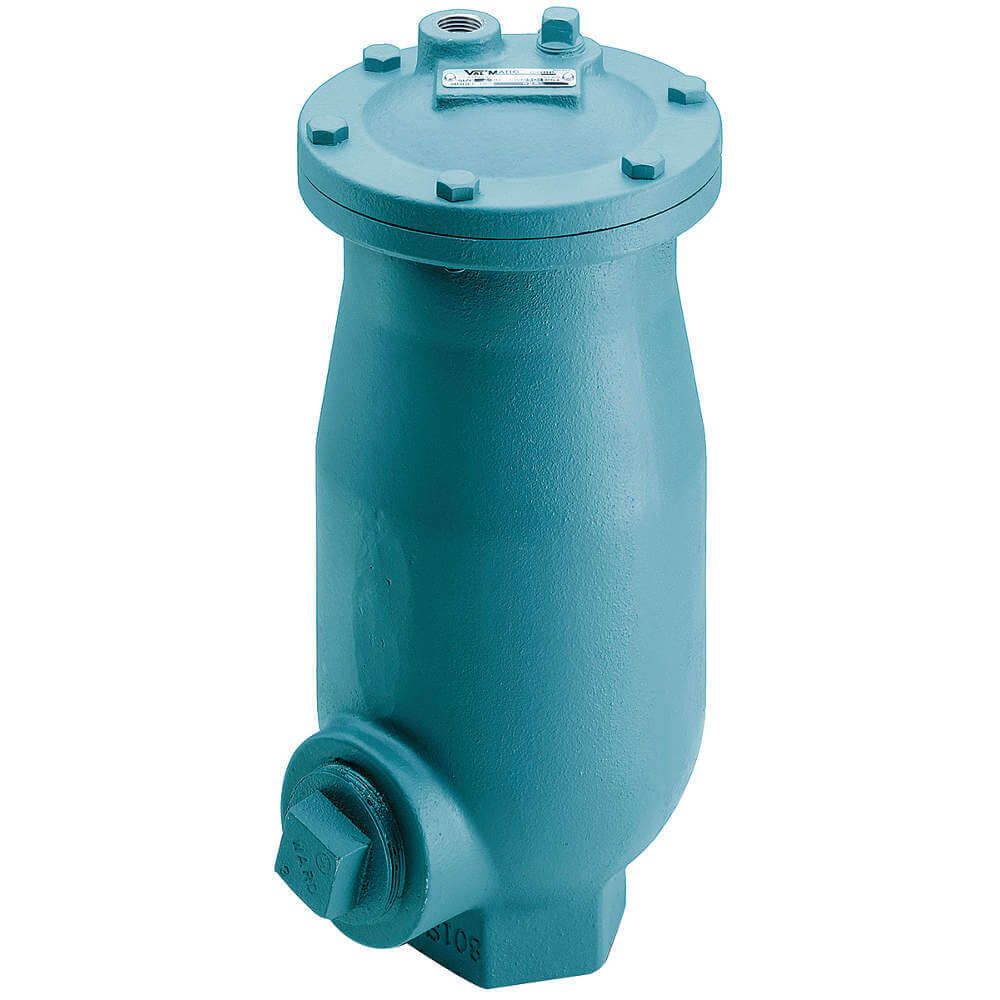
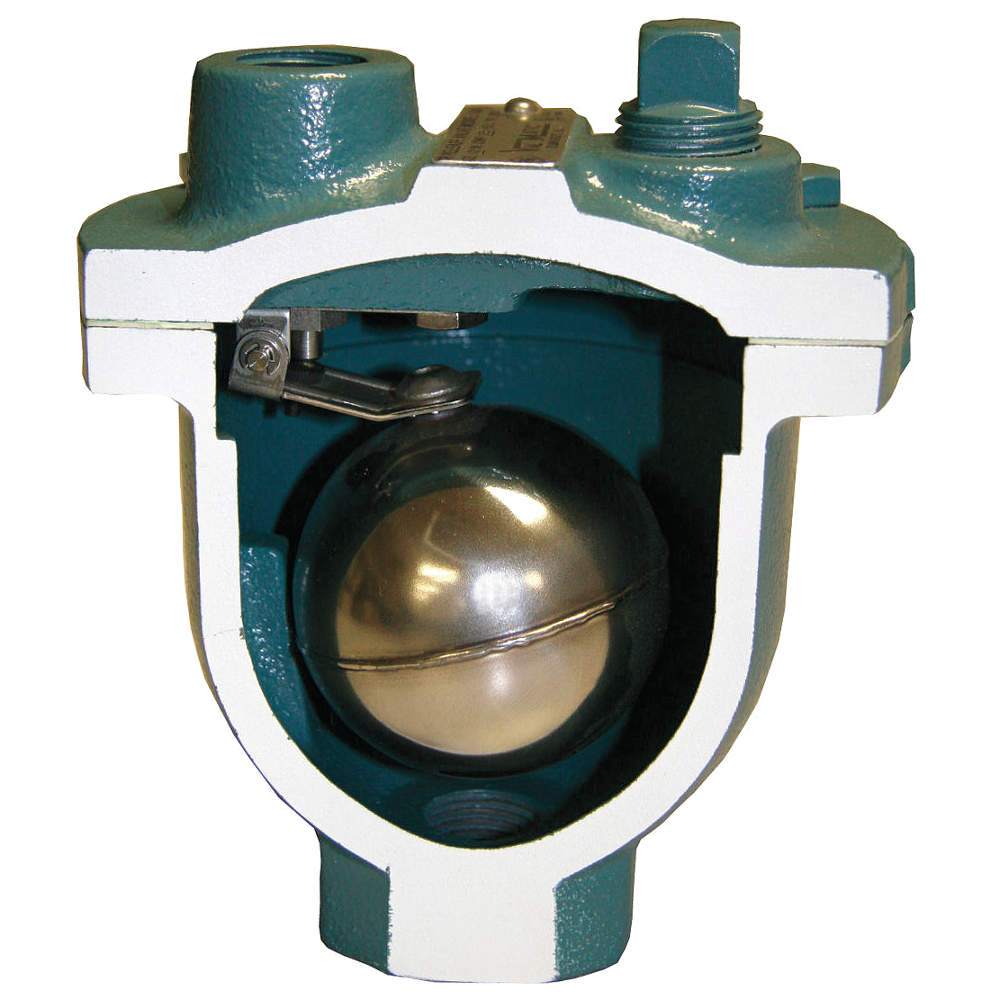
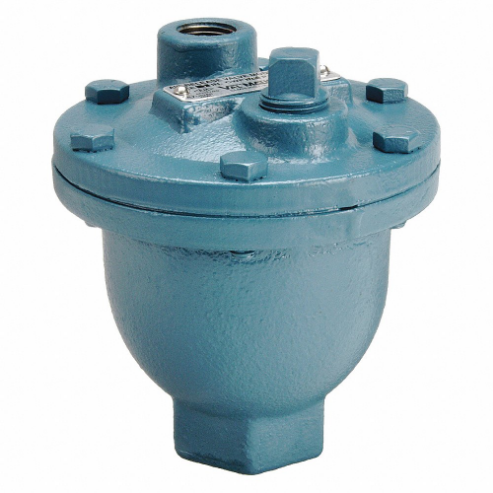
Val-Matic air release valves are designed for use in pipelines, handling solid-laden fluids, for continually releasing unwanted air and feature 316 stainless steel internal components for withstanding exposure to hydrogen sulfide & aggressive fluids. These units come equipped with a hexagonal stem in round bushing guided floats for preventing the accumulation of debris and a non-clog design for minimising the need for backwashing. Choose from a wide variety of these NSF 61 & 372 certified valves, available in 150 & 175 psi maximum pressures on Raptor Supplies.
Working Mechanism
- Mount the Val-Matic air release valve at the highest points in a pipeline where air collects easily.
- The liquid level decreases as air bubbles penetrate the valve and replace the liquid inside.
- When the level falls to where it no longer buoys the float, the float drops. This motion pulls the seat away from the orifice, activating the valve to open and vent the collected air into the atmosphere.
- As the air is released, liquid re-enters the valve, once again buoying the float, raising it until the seat pushes against the orifice, thereby shutting the valve.
- This cycle automatically repeats as often as required to sustain an air-free system.
Features
- Val-Matic small orifice valve is suitable for use with pipelines to release unwanted air; ideal for use in wastewater management and chemical processing facilities.
- These units come equipped with a hexagonal stem in round bushing-guided floats, preventing the accumulation of debris.
- They feature resilient seating for a positive shutoff and 316 SS internal trim for protection against aggressive water and hydrogen sulfide.
- These air release valves have a non-clogging design that removes backwash.
Frequently Asked Questions
Q. What is the difference between air relief valves and air release valves?
A. An air release valve opens at atmospheric pressure and closes automatically when liquid is present. A relief valve won't release collected air at pressures below the set point.
Q. Where do you install air release valves?
A. Air release valves and air vacuum valves are typically installed at every 800 m on the long pipe to easily release and draw air into the system.
Q. When do we use an air release valve?
A. In water or irrigation schemes, an air release valve is typically used to ensure that any entrained air in the water system is automatically released to maximise system performance.
Explore More
- KEYSHAFT
- NEW PIG
- TIMBER TUFF
- MAXI-LIFT
- NVENT
- Upblast Centrifugal Roof Vents Less Drive Pkg
- Door Stops
- Tube End Leveling Mounts
- Paint Mixers
- Center Drills
- MEMPHIS GLOVE Pigskin Leather Palm Gloves
- IRONCLAD Workcrew Light Duty Gloves
- ANSELL 47-402 Activarmr Comfortable Oil Repellent Gloves For Medium Duty Tasks
- CONDOR Welding Gloves, Straight Thumb, Standard, Cowhide, Brown
- DIXON Swivel Stems
- SPEARS VALVES Polypropylene Schedule 80 Black 45 Deg. Elbows, SR Fipt x SR Fipt
- CONDOR Leather Palm Knit Glove, Cowhide, ANSI Cut Level A3
- HUBBELL Electrical Floor Boxes
- WATTS PWMEM Series Reverse Osmosis System

 ChatMRO