


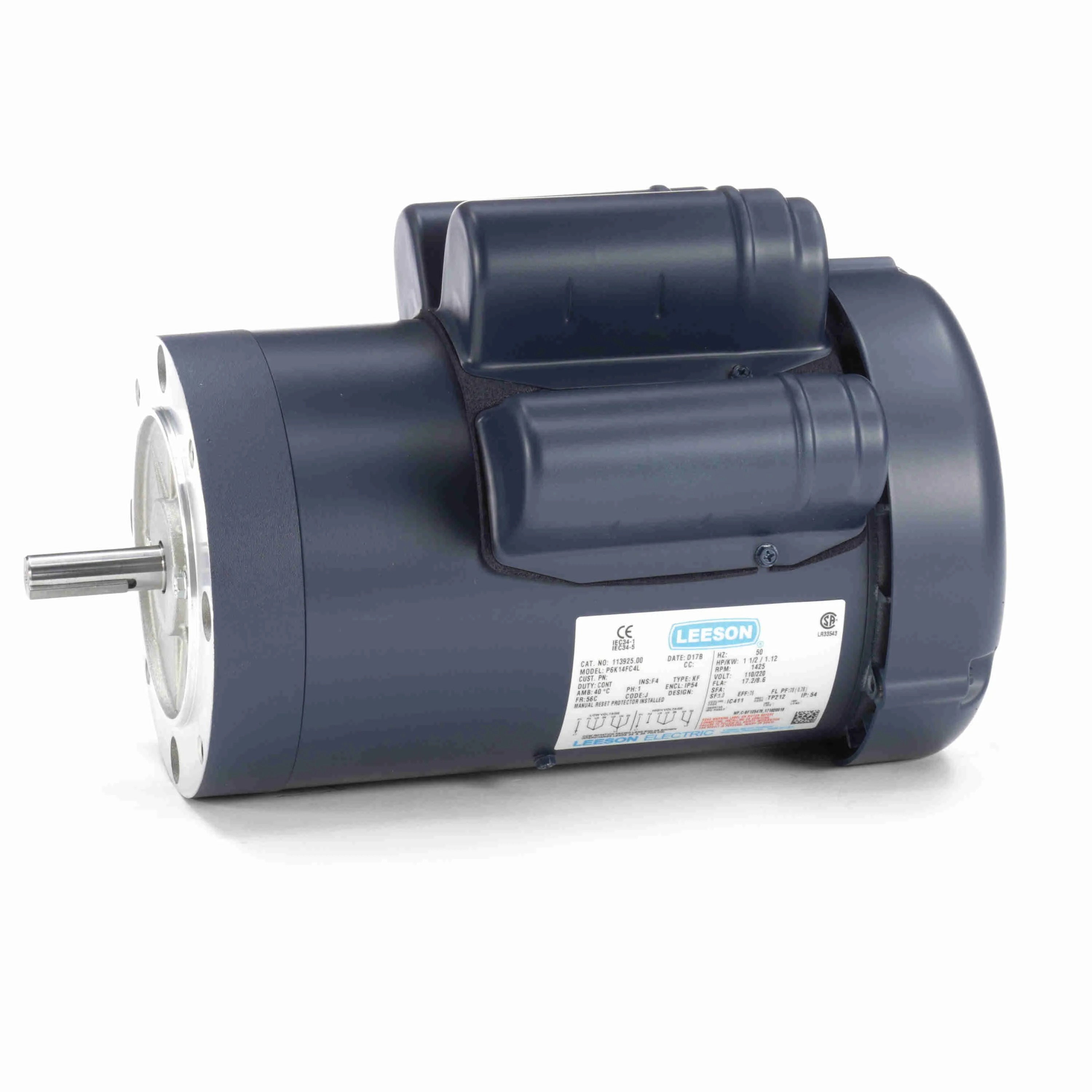
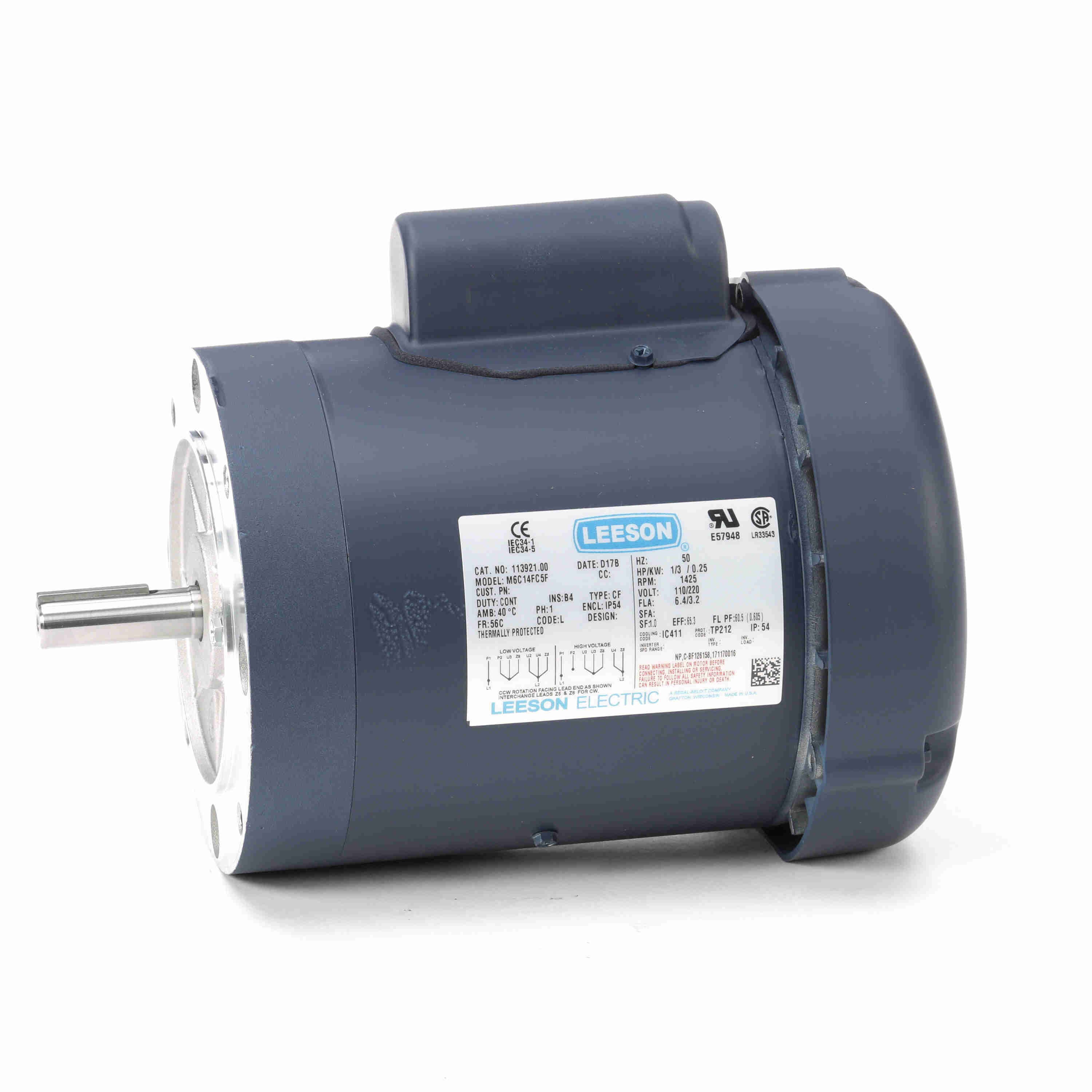
50 Hertz Motors, Single Phase, TEFC, C Face Less Base(6 Products)
LEESON
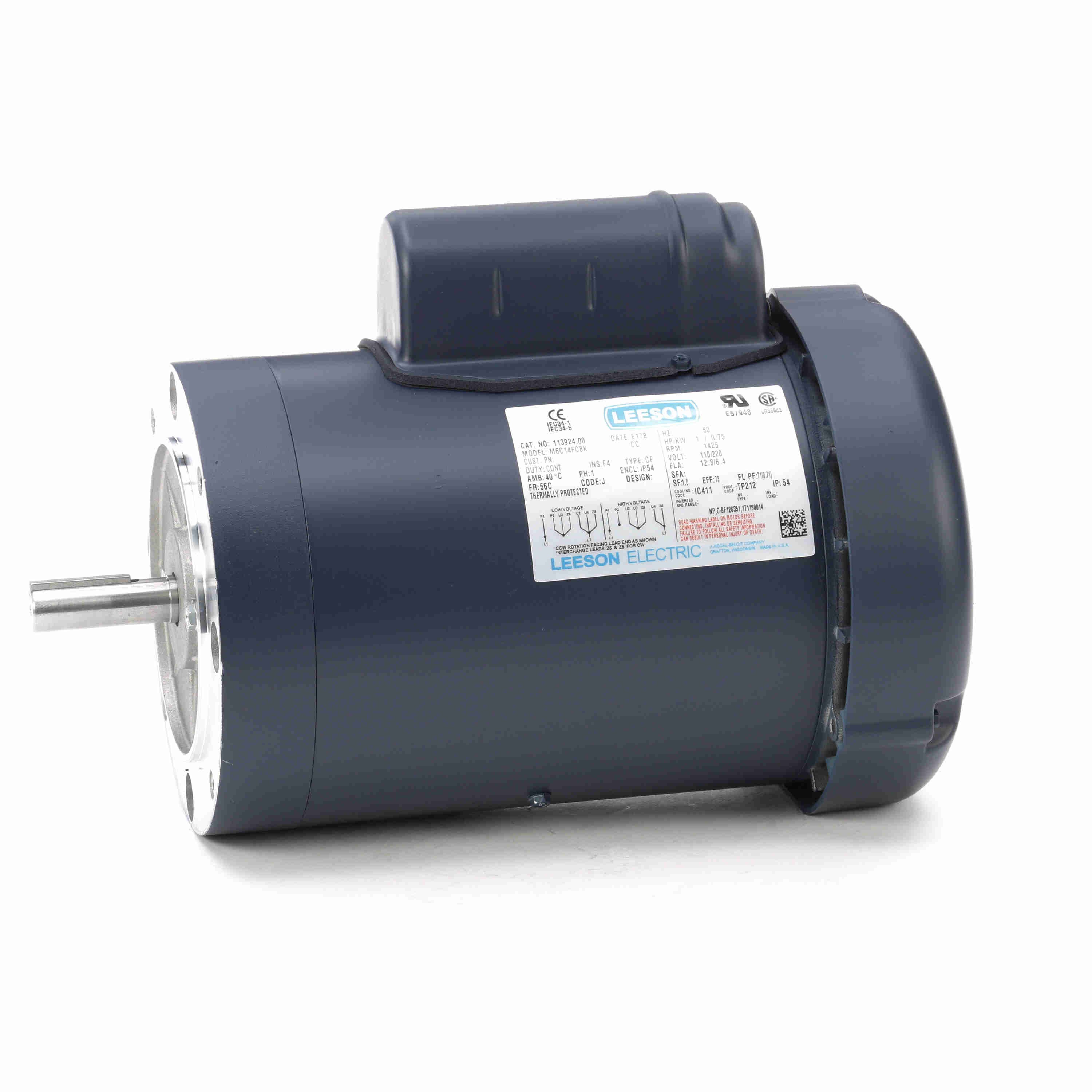
| Hp | Nameplate Rpm | Motor Type | Frame | Thermal Protection | Service Factor | Power Factor | Overall Length | Price |
|---|---|---|---|---|---|---|---|---|
| 1 hp | 1425 RPM | Capacitor Start | 56C | Manual | 1 | 71 | 12 1/2" | £832.19 |
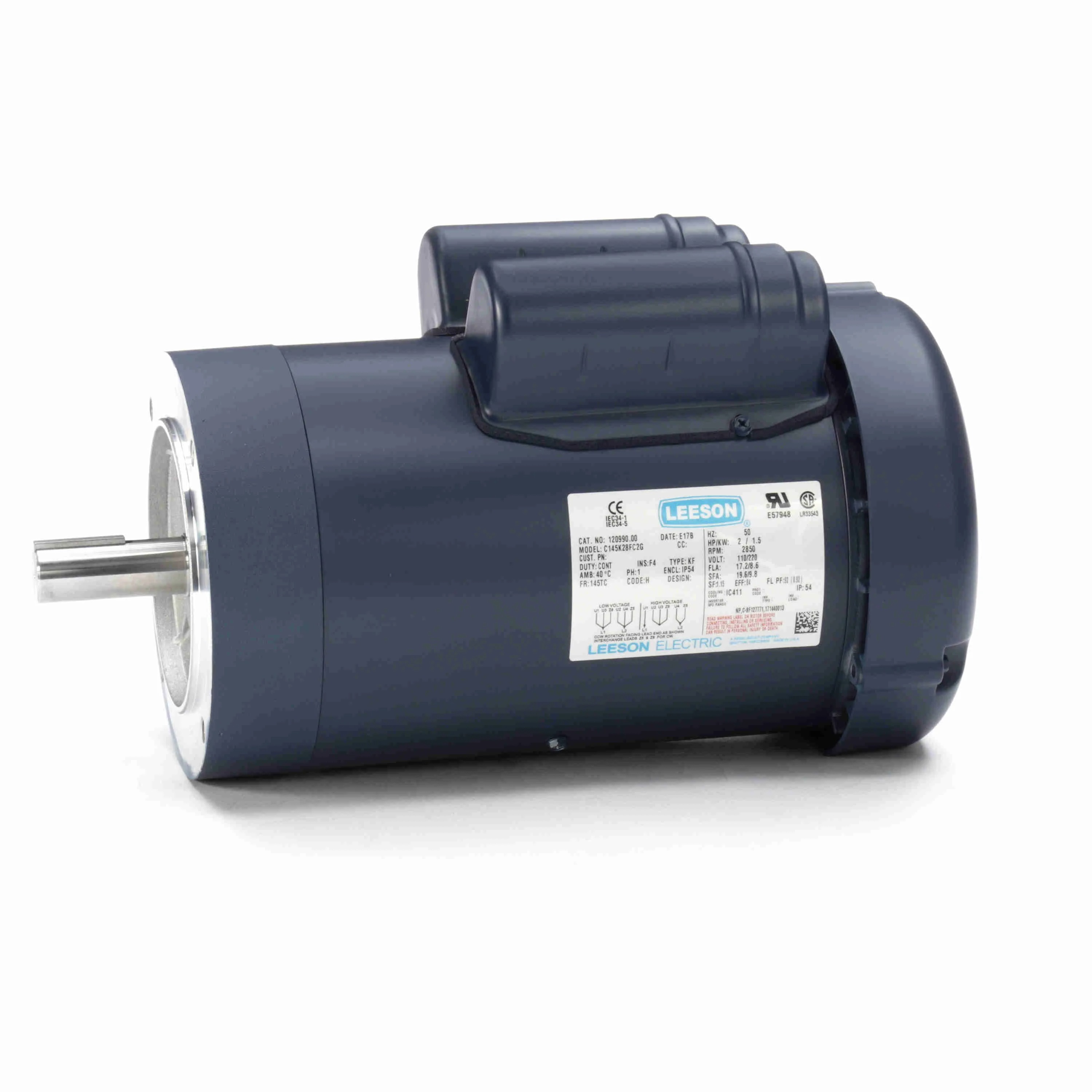
| 2 hp | 2850 RPM | Capacitor Start/Run | 145TC | No Protection | 1.15 | 92 | 13 15/16" | £1168.55 |
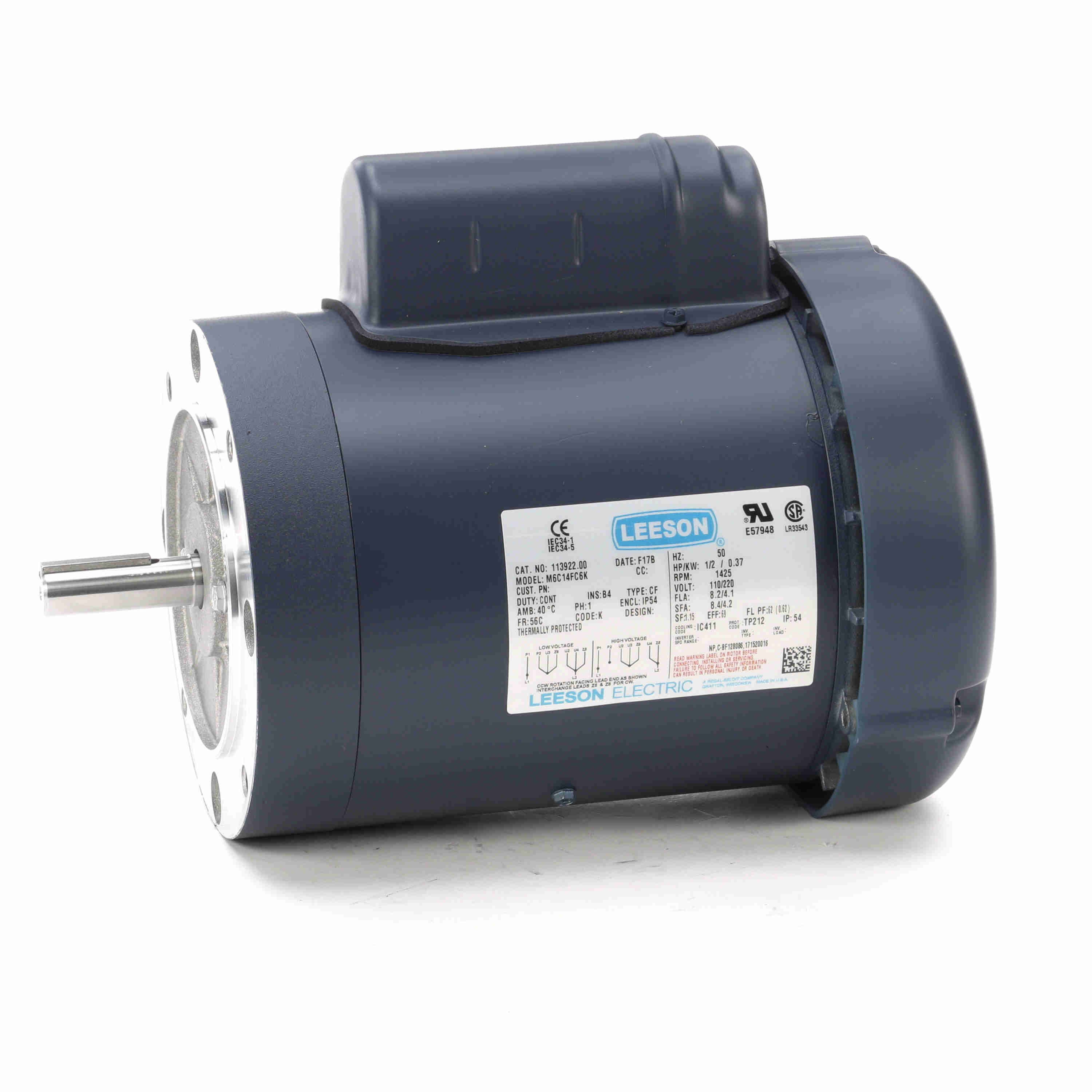
| 1/2 hp | 1425 RPM | Capacitor Start | 56C | Manual | 1.15 | 62 | 11 1/2" | £691.55 |
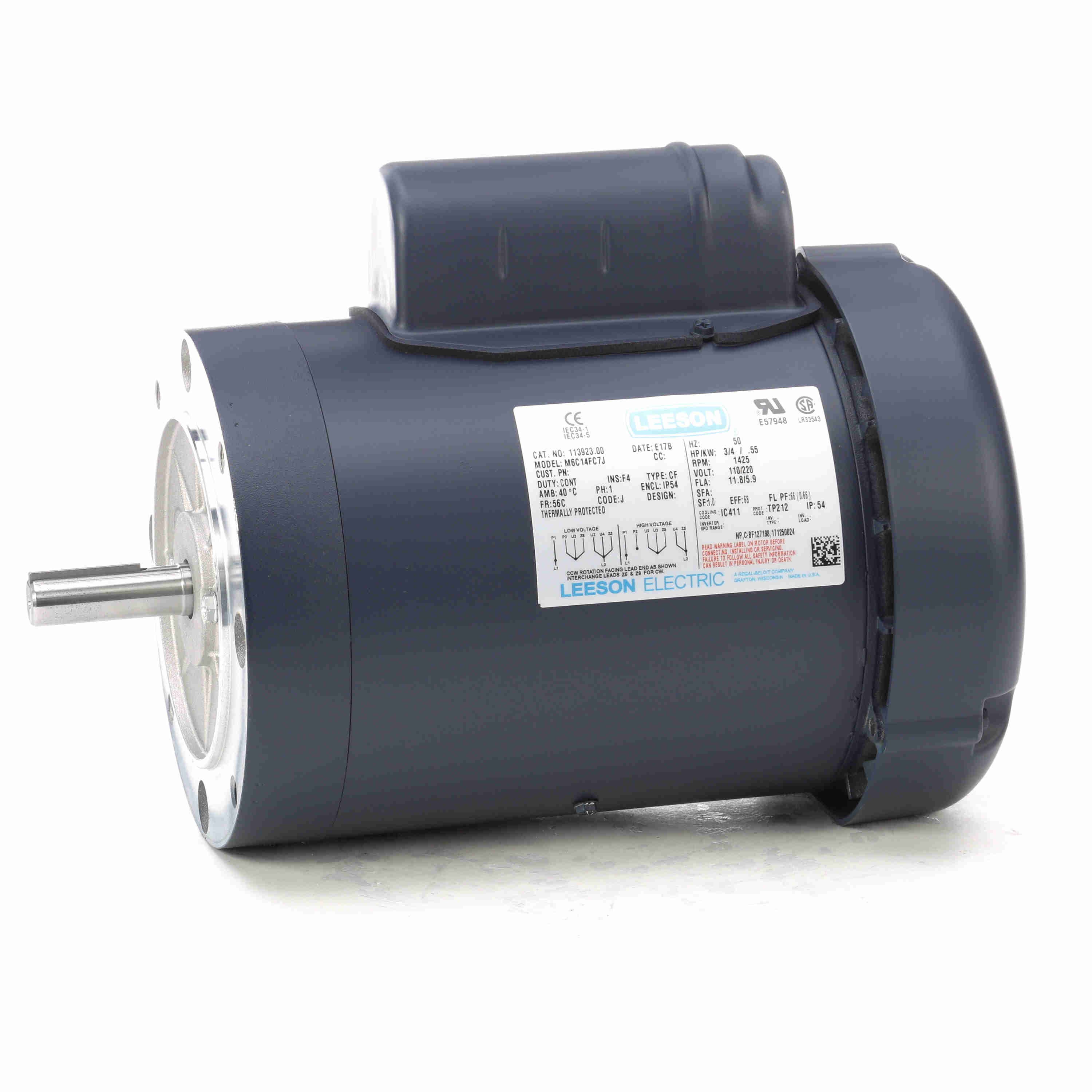
| 3/4 hp | 1425 RPM | Capacitor Start | 56C | Manual | 1 | 66 | 12" | £1376.93 |
| 1 1/2 hp | 1425 RPM | Capacitor Start | 56C | Manual | 1 | 78 | 13 1/2" | £1566.73 |
| 33/100 hp | 1425 RPM | Capacitor Start | 56C | Manual | 1 | 60.5 | 11" | £1079.61 |
Working Mechanism
- Electric motors convert electrical energy into mechanical energy for generating motion.
- Force is produced within the motor through the interaction between a winding alternating (AC) or direct (DC) current and the magnetic field.
Features
- Leeson 50 Hz motors produce torque up to 2 hp on a 50 Hz power supply.
- These energy-saving motors feature durable rolled steel frame construction for structural rigidity and less-base C-Face mounting for ease of installation.
- They are equipped with a TEFC enclosure to permit the cooling air to flow through the motor, thereby preventing overheating.
- These units include easy-to-read nameplates for quick identification and high-quality ball bearings to deliver speeds up to 2850 rpm.
- They are available in Class B and F insulation types to withstand temperatures up to 40 degrees C.
Frequently Asked Questions
Q. What is the difference between single, double and triple-phase motors?
A.
- Single-phase motor: Current flows through a single conductor.
- Double-phase motor: Current flows through 4-wire conductors (2 for each phase).
- Triple-phase motor: Current flows through 3 separate conductors.
Q. Do these motors prevent overloads?
A. Yes, these Leeson motors have a manual reset thermal protector to prevent overloads.
Q. What is the difference between TEBC and TEFC motors?
A. Totally enclosed blower-cooled (TEBC) motors are virtually identical to TEFC motors with the exception that the motor body is cooled by a separate "blower" positioned on the body rather than by a shaft-mounted fan while the motor is working at a high speed.
Q. What does Class B and F insulation mean?
A. These motors have Class B or F insulation for temperature control. The Class B insulated motors can handle temperatures up to 130 degrees C and Class F can withstand a maximum temperature of 105 degrees C.
Explore More
- BUILDPRO
- KEYSHAFT
- EMUGE
- DURATECH
- HILAND
- Quick-Disconnect Tube Fittings
- Cube Filters
- Wireless Wall Switches
- Steam and Hot Water Solenoid Valves
- Wares and Tray Drying Racks
- MCR SAFETY NXG Work Gloves, Black
- IRONCLAD Tundra Cold Condition Gloves
- GLOBE SCIENTIFIC Jars, Wide Mouth, 58 mm Opening
- ANVIL AS200KO Series Channels With Knock Out
- ANVIL AS926 Series Strut Braces
- WESTWARD Ball End Hex Key
- HOFFMAN Proline Flotek Series Server Cabinets
- SPEARS VALVES PVC Compact Ball Valves Regular Style, Threaded Ends, EPDM
- HDE Proof Testers
- MCR SAFETY Keys

 ChatMRO