


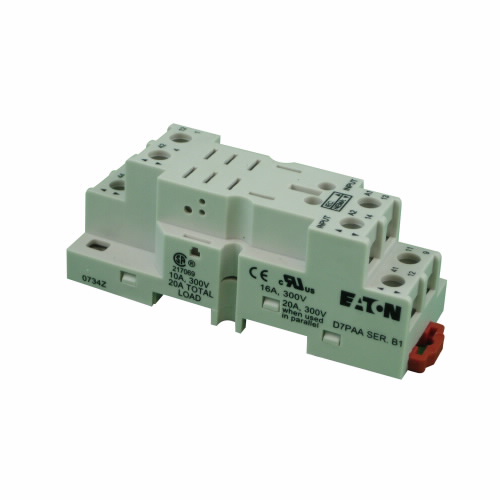
| Coil Voltage | Type | Mounting | Contact Material | Contact Rating | Price |
|---|---|---|---|---|---|
| - | General-purpose Relay | Din Rail, Screw | - | - | £14.12 |
| - | - | - | - | - | £38.71 |
| - | - | Din Rail, Screw | - | - | £49.15 |
| - | General-purpose Relay | - | - | - | £19.16 |
| - | General-purpose Relay | Din Rail, Screw | - | - | £36.86 |
| - | Standard Relay | - | - | - | £42.74 |
| - | General-purpose Relay | - | - | - | £58.45 |
| - | General-purpose Relay | - | - | - | £72.77 |
| 12V DC | Full-featured Relay | - | - | - | £58.96 |
| 24V | General-purpose Relay | - | Silver Alloy | 15A | £48.9 |
| 24V | General-purpose Relay | - | Silver Alloy | 15A | RFQ |
| 24V DC | General-purpose Relay | - | Silver Alloy | 15A | £63.89 |
| 24V DC | General-purpose Relay | - | Silver Alloy | 15A | £71.64 |
| 24V | - | - | Silver Alloy | 15A | £79.04 |
| 24V DC | General-purpose Relay | - | Silver Alloy | 15A | £82.42 |
| 120V | General-purpose Relay | - | Silver Alloy | 15A | £54.44 |
| 120V | General-purpose Relay | - | Silver Alloy | 15A | £74.12 |
| 120V | General-purpose Relay | - | Silver Alloy | 15A | £90.58 |
| 120V | General-purpose Relay | - | Silver Alloy | 15A | £49.36 |
| 120V | General-purpose Relay | - | Silver Alloy | 15A | £22.36 |
| 120V AC | Standard Relay | - | - | - | £69.83 |
| 240V | General-purpose Relay | - | Silver Alloy | 15A | £32.49 |
| 110/125V DC | General-purpose Relay | - | Silver Alloy | 15A | £55.82 |
| 220/240V | General-purpose Relay | - | Silver Alloy | 15A | £58.93 |
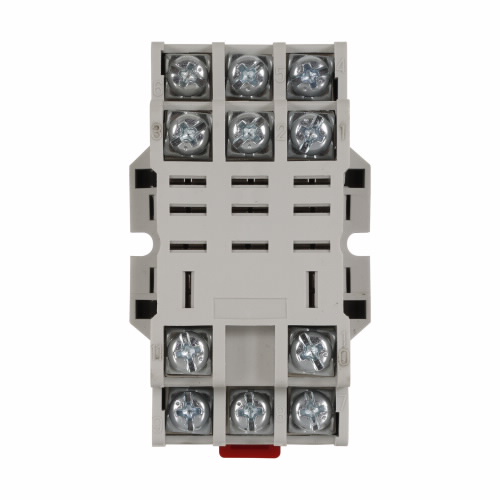
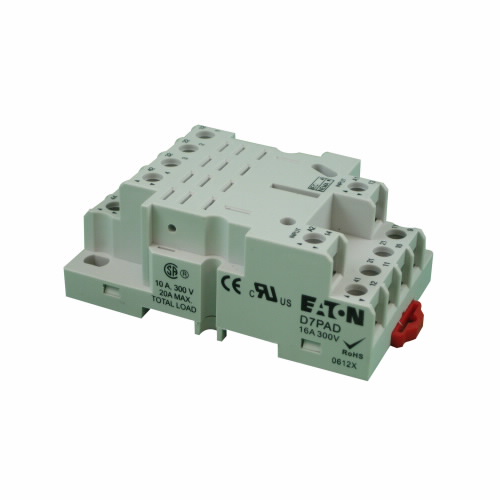
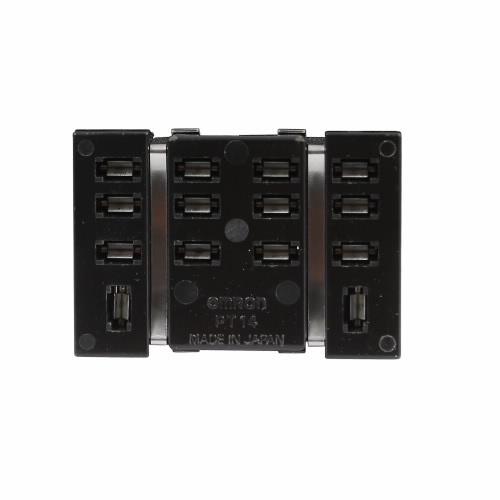
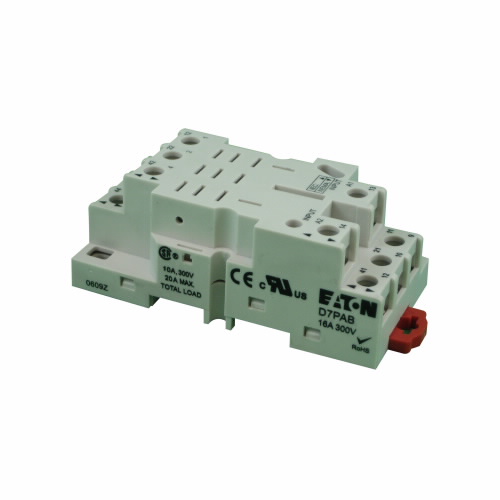
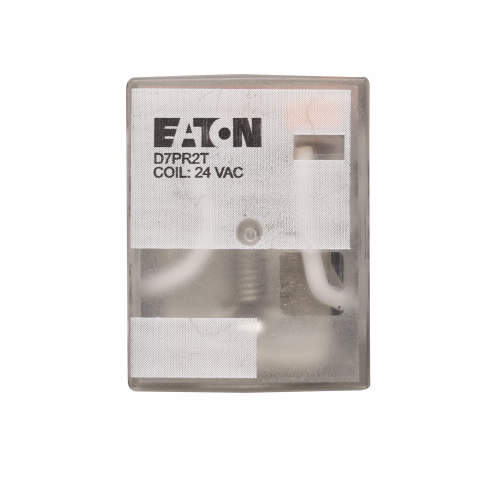
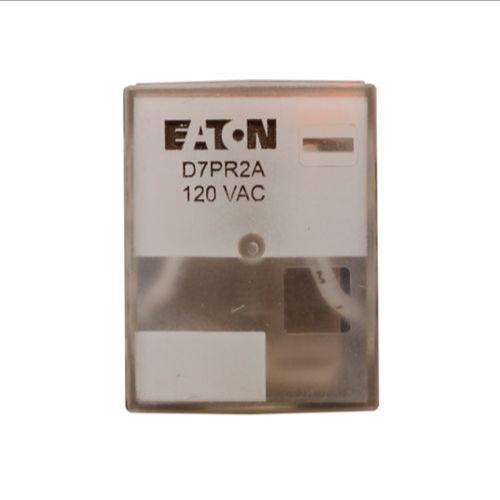
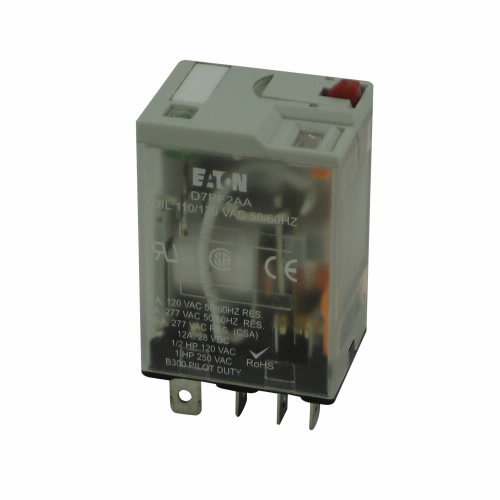
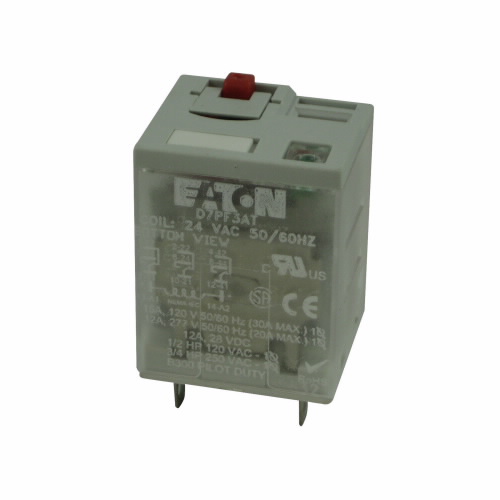
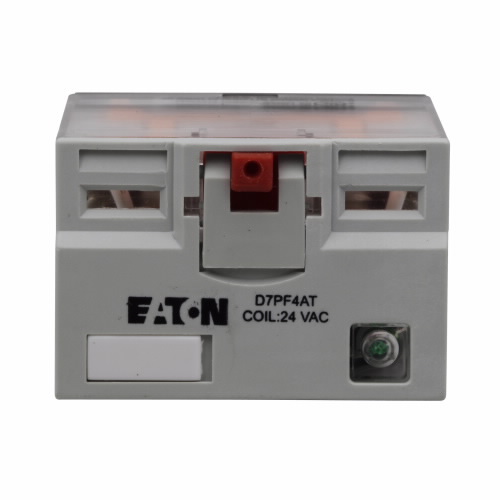
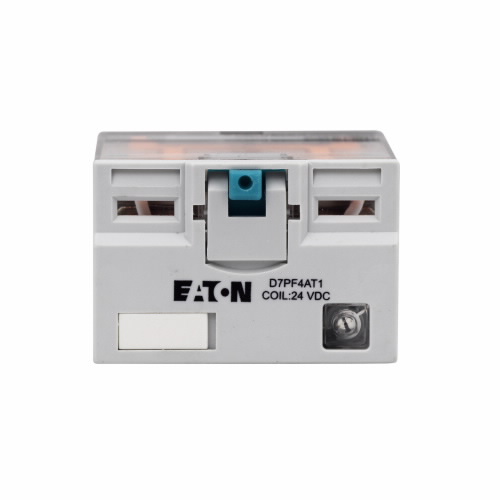
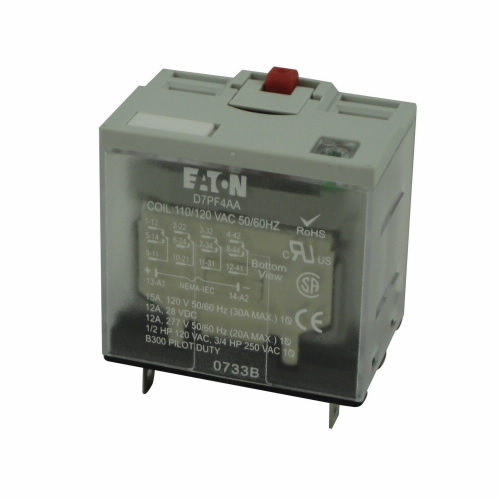
Features
- The relays are available in various contact configurations, such as normally open, normally closed and changeover contacts.
- Typically, normally open contacts are utilised for turning on the electrical load, while normally closed contacts are utilised for turning it off.
- Changeover contacts are employed to alternate between two distinct loads.
Frequently Asked Questions
Q. What are the operating ambient temperature of Eaton D7 Series general-purpose relays?
A. -40 to 185 degrees F.
Q. Can Eaton D7 Series general-purpose relays be mounted on a printed circuit board (PCB)?
A. Yes, Eaton D7 Series general-purpose relays can be mounted on a PCB, making them a suitable for electronic applications.
Q. What is the difference between a general-purpose relay and a circuit breaker?
A. The primary difference between a general-purpose relay and a circuit breaker lies in their functions. A relay is used to regulate the flow of electricity within a circuit, whereas a circuit breaker is designed to safeguard electrical systems and devices against potential harm caused by overcurrents or short circuits.
Explore More
- BEL-ART - SCIENCEWARE
- COSCO
- KEYSHAFT
- KINEDYNE
- SOUTH PARK BRASS
- Circular Fluorescent Lamps
- Anchor Kits
- Gas Cylinder Regulators
- Tree Pole Climbers and Accessories
- Pipe Couplings
- STARRETT Steel Straight Edge
- RINGERS GLOVES Heavy Duty Impact Gloves
- MEMPHIS GLOVE Cut Pro Kevlar/Synthetic Shell Cut Resistant Work Gloves, 13 Gauge, Black
- VIEGA PROPRESS Double Drop Elbow, Press x Press x FNPT
- VIBCO 6P Series Heavy Duty Electric Vibrators
- SPEEDAIRE Double Acting Air Cylinders, 2-1/2 Inch Bore Diameter
- ACROVYN Crash Rail, Silver, Acrovyn, 240 Inch Length
- CHRISLYNN M10 x 1.5 Grade 304 Stainless Steel Free Running Helical Inserts
- STARRETT Lock-Joint Transfer Type Calipers, Fine-Adjustment

 ChatMRO